


What the Iran War has Taught the West about the Iranian Regime

What The Iran War has Taught the West about the Iranian Regime

The Iran War that began with U.S. Operation Epic Fury on February 28, 2026, has delivered harsh but clarifying lessons about the clerical regime in Tehran. Far from headlines proclaiming ceasefires or diplomatic breakthroughs, the reality on the ground—detailed in contemporaneous reporting—shows a regime that remains ideologically rigid, tactically deceitful, and willing to expend its own people to preserve power. As of April 22, 2026, President Trump’s extension of the ceasefire for a mere three-to-five days, coupled with the continued U.S. naval blockade of the Strait of Hormuz, has exposed these truths in real time.

Lesson 1: Defeat Redefined as Victory

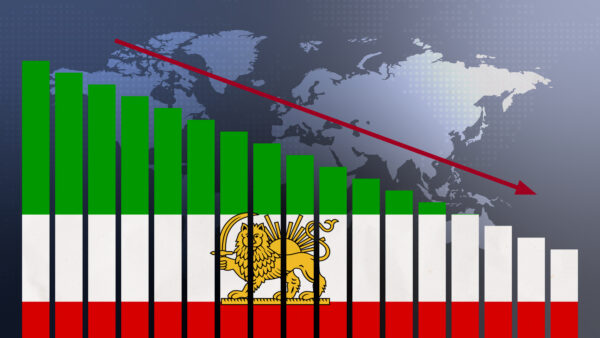
The Iranian regime will redefine defeat in order to claim victory. Despite devastating military losses from Operation Epic Fury and the ongoing economic stranglehold of the Hormuz blockade—costing Tehran an estimated $500 million per day—the regime refuses to acknowledge any setback. Iranian state television declared on April 22 that “Iran will not recognize the ceasefire announced by Trump, may not abide by it and will act in accordance with its national interests” (Ynet). An IRGC-linked outlet warned that the blockade “means the continuation of the fighting” and that Tehran “will break the blockade by force if necessary” (Ynet). Mahdi Mohammadi, adviser to Iranian Parliament Speaker Mohammad Bagher Ghalibaf, dismissed the truce outright: “Trump’s ceasefire extension means nothing. The losing side cannot dictate terms” (World Israel News). In the regime’s narrative, every concession demanded by Washington is reframed as aggression, allowing Tehran to declare moral victory while its economy hemorrhages.

Lesson 2: Lie and Delay to Fight Again

The Iranian regime will lie, threaten, and delay in order to rebuild and fight again. In January 2026 the regime explicitly pledged to the Trump administration that it would halt the execution of roughly 800 protesters detained during nationwide unrest. That promise was broken the moment pressure from the U.S. was eased. United States officials now fear Tehran is deliberately stalling negotiations to “recover systems and missiles buried during the war” (Ynet). The power struggle inside Iran—between IRGC hardliners and civilian diplomats, with Supreme Leader Mojtaba Khamenei “barely communicating” and possibly in hiding—has produced exactly the paralysis Washington anticipated (Axios). Yet this dysfunction is not weakness; it is tactical delay. Despite the restraint shown by President Trump’s national security team on April 21, Iranian officials have met American diplomacy with silence—offering no substantive response while stubbornly demanding the blockade be lifted before talks even begin. (World Israel News).

Lesson 3: Sacrifice People to Maintain Control

The Iranian regime will sacrifice the Iranian people in order to maintain control. While Iranian officials haggled over talking points in Islamabad, security forces inside the country resumed a barbaric execution spree. At least 14 Iranians have been hanged since Operation Epic Fury began, including an 18-year-old protester and a dual Iranian-Swedish national. Iran’s judiciary chief, Gholamhossein Mohseni Ejei, openly called for accelerated death sentences, declaring, “Sentences involving ‘confiscation of property and execution’ for those linked to enemy groups should be carried out more quickly. . . A full-scale war is under way against us” (Gatestone Institute). Human-rights experts note only 7% of executions are publicly announced, suggesting the true toll is far higher. This repression occurs precisely “at the same time that the Trump administration has been repeatedly offering Tehran the possibility of a diplomatic resolution” (Gatestone Institute).

The regime’s message to its own citizens is unmistakable: dissent will be met with the gallows, even as the leadership begs the world for relief from sanctions.

Lesson 4: Mantras of Hate will Never Change

The Iranian regime will never recant their mantras, “Death to America” and “Death to Israel.” Since February 28, 2026, there has been no hint of an ideological retreat. Instead, the Iranian regime issues threats and continued support for its proxy attacks. The regime’s refusal to recognize the ceasefire, its threats to reopen the Strait of Hormuz by force, and its public executions all flow from the same unchanged ideology.

Conclusion: Finish the Task

Taken together, these lessons lead to a difficult but unavoidable conclusion. The events set in motion on February 28, 2026, have exposed the limits of partial measures and incremental responses. The Iranian regime has shown that it can absorb pressure, manipulate narratives, and exploit diplomatic openings without fundamentally changing its behavior.

Therefore, the United States and Israel face a critical decision. If the goal is lasting stability—not just temporary calm—then the current approach may be insufficient. The regime’s ability to adapt and endure suggests that only a comprehensive strategy can neutralize the threat it poses.

This is not merely a question of policy but of principle. The Iranian people themselves are among the primary victims of the regime’s actions. Any effort to confront the regime must ultimately aim to reduce its capacity to harm both its own citizens, the broader region, and beyond.

The lessons of this conflict are clear. The challenge now is whether the United States and Israel are willing to act on them.

Blessors of Israel continues to closely monitor this developing story. Please pray for our leadership, troops, Israel and her people, along with the Iranian people.

Dr. Matthew Dodd, Executive Director | April 22, 2026

Is the Iran War ‘Close to Being Over’?

United States President Donald Trump is projecting confidence that the seven-week-old Iran conflict is nearing an end. In interviews aired on Fox Business and ABC News, Trump stated the war is “very close to being over” and predicted “an amazing two days ahead,” while noting Tehran “wants to make a deal very badly” (Breitbart). Yet developments reveal a delicate balance of crushing economic pressure via a U.S. naval blockade and ongoing diplomatic efforts that could either secure a breakthrough or see fighting resume before the ceasefire expires next week.

The conflict ignited on February 28, 2026, with joint U.S.-Israeli strikes on Iranian nuclear, missile, and leadership targets—building on June 2025 operations that had already crippled facilities at Natanz, Isfahan, and Fordo and eliminated Supreme Leader Ayatollah Ali Khamenei (The Times of Israel). A fragile two-week ceasefire began on April 8. Direct talks mediated by Pakistan in Islamabad on April 11 collapsed over Tehran’s refusal to abandon uranium enrichment or surrender its stockpiles (Algemeiner).

In response, the U.S. launched a naval blockade on April 13, which the Pentagon confirmed was “fully implemented” within 36 hours by April 15. A U.S. Navy destroyer turned back two oil tankers leaving Chabahar port on April 14 and intercepted another vessel the following day (Reuters). The action targets Iran’s oil exports—the regime’s economic lifeline—prompting warnings that sustained pressure could collapse the economy within three months amid existing damage from 47 days of internet blackouts and infrastructure strikes (Axios).

Trump framed the blockade as strategic leverage rather than escalation. “If I pulled up stakes right now, it would take them 20 years to rebuild that country,” he told Fox Business (Breitbart). Vice President JD Vance, who led the U.S. delegation in Islamabad, outlined the administration’s vision on April 14: a “grand bargain” in which Iran would “permanently abandon nuclear ambitions and end support for terrorism in exchange for full economic normalization” (Algemeiner). Deputy White House Chief of Staff Stephen Miller reinforced this on Fox News, declaring, “President Trump has put Iran in a box. He’s played the checkmate move” (Breitbart).

Diplomatic momentum persists. Pakistani Army Chief Field Marshal Asim Munir arrived in Tehran on April 15 to bridge gaps, with U.S. officials reporting an “in-principle” truce extension and possible resumption of talks “within days” (Axios). Backchannels involving Egypt and Turkey continue. Core disputes remain: Iran’s nuclear program, freedom of navigation in the Strait of Hormuz (which Tehran had closed to foreign vessels), and war-damage compensation. IAEA Director General Rafael Grossi warned in Seoul on April 15, “Iran has a very ambitious, wide nuclear program so all of that will require the presence of IAEA inspectors. . . Otherwise, you will not have an agreement. You will have an illusion of an agreement” (Breitbart).

International reactions are mixed. Russian Foreign Minister Sergey Lavrov openly affirmed Iran’s “inalienable right” to enrichment during a China visit on April 14, while Trump announced China had pledged not to supply arms (World Israel News). Iran’s IRGC has threatened proxy disruptions in the Red Sea and Persian Gulf, though some tankers reportedly evade the blockade via dark fleets (Fox News).

Israel maintains a cautious stance. Prime Minister Benjamin Netanyahu declared on Holocaust Remembrance Day that the strikes had “prevented an Iranian-wrought second Holocaust,” stating the regime’s nuclear and missile programs had been crippled (The Times of Israel). However, Israeli officials insist the mission is incomplete without full regime change and permanent denuclearization. A senior U.S. official clarified that separate Israel-Lebanon ceasefire talks in Washington on April 14 “aren’t part of Iran talks,” even as Israel’s security cabinet weighed a one-week Lebanon pause amid U.S. pressure (The Times of Israel).

White House officials continue to express guarded optimism. Whether Trump’s predicted “amazing two days” materialize depends on whether Tehran accepts U.S. red lines under blockade-induced duress. History shows Iranian regimes have weathered sanctions before, but the current combination of military degradation and economic isolation may prove decisive. A framework deal could extend the truce and pave the way for reconstruction; failure risks renewed hostilities before the ceasefire is scheduled to end. For now, the coming hours will determine if pressure and diplomacy deliver the grand bargain—or if the war’s end remains elusive (The Times of Israel).

Blessors of Israel continues to closely monitor this developing story. Please pray for our leadership, troops, Israel and her people, along with the Iranian people.

Dr. Matthew Dodd, Executive Director | April 15, 2026

The Roar of the Lion: Will the Hormuz Blockade Finally Break the Cycle of Terror?

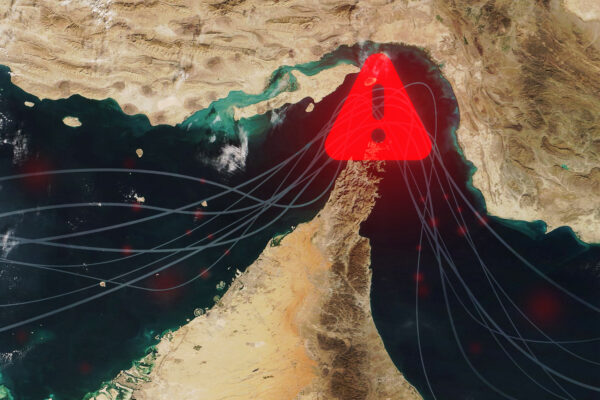
The waters of the Strait of Hormuz, one of the world’s most vital arteries for energy, have become the front line of a definitive confrontation. Following the collapse of high-stakes peace talks in Islamabad on Saturday, April 11, 2026, the United States has moved beyond sanctions to a physical naval blockade—a move that analysts say could finally bring the Iranian regime to its knees, but not without significant global tremors (The Jerusalem Post).

A Vow of “Never Again”

Speaking on Yom Hashoah (Holocaust Remembrance Day), Israeli Prime Minister Benjamin Netanyahu framed the ongoing military campaign, dubbed “Operation Roaring Lion,” as a historical necessity. Addressing the nation from Yad Vashem, Netanyahu declared that the operation had “thwarted Iran’s plans for nuclear holocaust.” In a powerful assertion of sovereignty and strength, he noted, “Unlike the past, whoever seeks to destroy us now, brings upon themselves destruction on a scale they never could imagine” (JNS).

The Blockade: Economic Suffocation

At 10:00 a.m. ET on April 13, the U.S. Navy, supported by 10,000 sailors and the aircraft carrier U.S.S. Abraham Lincoln, began enforcing a total blockade of Iranian ports. According to Miad Maleki, a national security analyst, the move is designed to make “continued resistance economically impossible,” with Iran facing estimated losses of $13 billion per month (Iran International).

The impact is already being felt within Tehran. Reports from the Iranian Central Bank suggest that the damage from this “40-day war” could take twelve years to repair, with inflation potentially skyrocketing to 180% (Iran International). Nevertheless, Mossad Chief David Barnea remains resolute, stating that the “mission isn’t over until the regime falls” (The Times of Israel).

A World on Edge

The blockade has drawn sharp condemnation from Beijing. Foreign Ministry spokesman Guo Jiakun labeled the US actions “dangerous and irresponsible,” warning that the military deployment would only “heighten tensions and undermine the fragile ceasefire” (Breitbart). On the tactical front, the world watched as the Chinese-linked tanker Rich Starry attempted to run the blockade on April 14, only to make an abrupt U-turn in the Gulf of Oman, signaling the immense pressure being applied by the US fleet (Breitbart).

The Path to Peace?

Amidst the naval standoff, a flicker of diplomatic hope emerged from Washington, a summit hosted by Secretary of State Marco Rubio. In a historic first since 1993, Israeli and Lebanese envoys met for direct talks to discuss a peace deal as the Lebanese government distances itself from Hezbollah (The Times of Israel). This “separate track” of diplomacy suggests that while the “head of the octopus” in Tehran is being squeezed, countries like Lebanon may be looking for a way out from the cruel chokehold of Iran’s proxies.

As the current truce nears its April 21 expiration, the question remains: will the “Roaring Lion” bring about a new era of stability, or is the world standing on the precipice of a much larger conflagration? For now, the United States and Israel appear committed to a singular goal: ensuring that the regime which funded decades of terror is no longer a threat to the region or the world.

Blessors of Israel continues to closely monitor this developing story. Please pray for our leadership, troops, Israel and her people, along with the Iranian people.

Dr. Matthew Dodd, Executive Director | April 14, 2026

Will the Iran Ceasefire Hold?

Two weeks. That is the length of the ceasefire Iran and the United States agreed to on Tuesday night, April 7, 2026, after 39 days of devastating conflict that began February 28 with the killing of Supreme Leader Ayatollah Ali Khamenei. As Saturday’s talks in Islamabad loom, the central question is whether this pause can survive its own terms—or whether it is already unraveling under the weight of unmet conditions, proxy wars, and clashing victory narratives.

The truce’s headline achievement was supposed to be the reopening of the Strait of Hormuz. Yet on April 9, the waterway remains “effectively closed,” according to shipping and energy executives. Sultan Al Jaber, head of Abu Dhabi National Oil Company, stated bluntly: “The Strait of Hormuz is not open. Access is being restricted, conditioned and controlled” (Axios). Hundreds of tankers sit idle; nearly 20,000 mariners are stranded. Iran, meanwhile, is floating demands for a $1-per-barrel toll paid in cryptocurrency (Axios)—hardly the “COMPLETE, IMMEDIATE, and SAFE OPENING” that President Trump described in his Truth Social post (Truth Social). New Supreme Leader Mojtaba Khamenei, in a new statement purportedly written by him, declared Iran would bring the strait’s “management of the Strait of Hormuz into a new stage” during negotiations while insisting Tehran is the “definite victor” of the war (Axios).

President Masoud Pezeshkian framed the ceasefire as strength, not surrender: it is “not a sign of weakness but a way to solidify Iran’s proud victories” and was “approved by the supreme leader” (The Times of Israel). Yet inside Iran, diaspora voices express deep anxiety. Kurdish opposition figure Kako Aliyar warned that a regime that “withstood pressure from the United States and Israel” may “become even more confident and intensify its domestic repression” (The Jerusalem Post). Journalist Truska Sadeghi added that the truce “has not really produced results for either side,” leaving “everything in a suspended situation” and risking harsher crackdowns (The Jerusalem Post).

The leadership losses Iran suffered are staggering. A detailed accounting lists 52 senior officials and commanders killed, from the Supreme Leader Ali Khamenei himself to chiefs of staff, defense council secretaries, and intelligence deputies—many struck in the opening minutes or days (Iranian International). The command structure of the Revolutionary Guard has been hollowed out. Yet Mojtaba Khamenei’s statement still demands “compensation for all damages and the price for the blood of martyrs,” while treating “all resistance fronts as a unified entity.” That language keeps Hezbollah, Hamas, and other proxies in play (The Times of Israel).

Nowhere is this tension sharper than Lebanon. Israeli Prime Minister Benjamin Netanyahu stated flatly on April 9: “There is no ceasefire in Lebanon. We continue to strike Hezbollah with great force, and we will not stop until we restore your security.” The goal, he said, is a “historic and sustainable peace agreement between Israel and Lebanon” that disarms the group (The Times of Israel). President Donald Trump confirmed he had urged Netanyahu to keep the campaign “low-key” to protect the Iran truce, telling reporters: “If they don’t make a deal, it’s going to be very painful. . . Remember, they’ve been conquered. They have no military” (The Times of Israel). Iran has signaled it may walk away from Islamabad if Lebanese strikes continue.

Regional actors are hedging. Saudi Arabia and Iran held their first direct foreign-minister conversation since the war—Prince Faisal bin Farhan al-Saud and Abbas Araghchi—yet Saudi energy facilities only recently halted operations after Iranian attacks that killed a security guard (Breitbart). Turkish President Recep Tayyip Erdogan told Iran’s president the Islamabad talks “should be utilized to the fullest extent for lasting peace” (The Times of Israel). Meanwhile, Hamas military spokesman Abu Obaida declared on April 5 that any push for disarmament is “an overt attempt to continue the genocide” the group “will not accept” (Gatestone Institute).

Economically, the war’s scars will outlast any 14-day clock. Shipping giant Maersk warned the ceasefire “does not yet provide full maritime certainty” (Axios). DeVere Group CEO Nigel Green said, “This is a 14-day window, not a permanent policy shift. You have a fifth of the world’s oil supply moving through a corridor that is still effectively under the influence of one of the parties to the conflict. That’s not stability” (Axios). Oil remains near $100 a barrel; fertilizer and helium shortages persist. Inside Israel, the Tax Authority reports nearly 30,000 property-damage claims (The Jerusalem Post). Civilian casualties in Iran from strikes are estimated between 1,701 and 1,900 (The Jerusalem Post). The ceasefire is holding—barely—because both sides need breathing room. But Iran’s victory rhetoric, Hormuz power play, proxy entanglements, and domestic hardline instincts suggest the window is closing faster than diplomats can open it. Without verifiable strait access, verifiable proxy restraint, and verifiable concessions on Iran’s nuclear and missile programs, the most likely outcome is not peace but a return to conflict on even more dangerous terms. Saturday in Islamabad will not decide whether the ceasefire holds; it will decide whether anyone still believes it can.

Blessors of Israel continues to closely monitor this developing story. Please pray for our leadership, troops, Israel and her people, along with the Iranian people.

Dr. Matthew Dodd, Executive Director | April 9, 2026

The Iran War and What It Has Revealed About NATO

The Iran War, launched on February 28, 2026, as Operation Epic Fury, has delivered more than battlefield results. It has laid bare the hollow core of North Atlantic Treaty Organization (NATO). As U.S. and Israeli forces dismantled Iranian missile factories, naval assets, and proxy networks, European allies stood aside—revealing an alliance long praised for collective defense as little more than a one-way security blanket for Europe (The Times of Israel; AP News).

President Donald Trump did not consult NATO before striking Iran. He did not need to. The operation’s goals—destroying ballistic-missile production, annihilating Iran’s navy, neutralizing proxies, and ending its nuclear ambitions—were American and Israeli priorities. Yet when Iran closed the Strait of Hormuz in retaliation, choking 20 percent of global oil and triggering jet fuel shortages that will soon hammer Europe, NATO members offered no meaningful help (Reuters; Politico).

Trump’s frustration boiled this week. In a Truth Social post on Wednesday, March 31, 2026, he declared, “All of those countries that can’t jet fuel because of the Strait of Hormuz, like the United Kingdom, which refused to get involved in the decapitation of Iran, I have a suggestion for you: Number 1, buy from the U.S., we have plenty, and Number 2, build up some delayed courage, go to the Strait, and just TAKE IT. You’ll have to start learning how to fight for yourself, the U.S.A. won’t be there to help you anymore, just like you weren’t there for us. Iran has been, essentially, decimated. The hard part is done. Go get your own oil!” (Truth Social).

Today it was reported by Israel Hayom, that Trump told the Telegraph the U.S. exit from NATO has now gone “beyond a review,” meaning a step that appears closer than ever. He stated bluntly, “I was never swayed by NATO. I always knew they were a paper tiger, and Putin knows that too” (i24 News). Secretary of War Pete Hegseth reminded the world that the U.S. had done “the heavy lifting on behalf of the free world” and that others, including Britain’s “big, bad Royal Navy,” should now step up for the strait (AP News).

France and Spain restricted U.S. overflights and facilities. The U.K. sent defensive systems to Gulf partners but refused direct involvement in the war. This divergence highlights a fundamental challenge for NATO. While the alliance was designed for collective defense, it struggles to maintain unity in conflicts that extend beyond its traditional geographic focus. The Iran war has made clear that NATO’s effectiveness depends heavily on U.S. leadership—and that such leadership does not always guarantee alignment among its members.

While Europe hesitated, Israel moved decisively. Prime Minister Benjamin Netanyahu told his cabinet that Israel is forging new alliances with Arab states that “Today. . . understand” the Iranian threat. UAE, Bahrain, Saudi Arabia, Oman, and even Kuwait have drawn closer, seeking Israeli assistance and coordination (World Israel News).

The war’s economic toll has been global. Today it was announced that the U.S. will loan up to 10 million barrels from the Strategic Petroleum Reserve (The Times of Israel). The IEA, IMF, and World Bank announced coordinated action to blunt “substantial, global and highly asymmetric” shocks (Reuters).

The Iran War has not merely tested U.S. resolve; it has exposed NATO’s deepest flaw. An alliance that demands American blood and treasure for European security but withholds even diplomatic muscle or naval escort when American interests are imperiled cannot endure in its present form. The alliance must now adapt to a world where conflicts are increasingly complex, energy security is a central concern, and member states do not always share the same strategic priorities.

If NATO cannot adjust, the future of global security may lie in smaller, more agile coalitions built around shared interests. In that sense, the most lasting impact of the Iran war may not be measured solely by its outcome, but by how it reshapes the structure of international alliances for years to come.

Blessors of Israel continues to closely monitor this developing story. Please pray for our leadership, troops, Israel and her people, along with the Iranian people.

Dr. Matthew Dodd, Executive Director | April 1, 2026

Will Trump End the Iran War Without Opening the Strait of Hormuz?

As the U.S.-Israel campaign against Iran enters its fifth week, President Donald Trump is signaling a potential off-ramp that challenges conventional expectations of total victory. With Iran’s military backbone fractured after a month of strikes, Trump appears ready to declare core objectives met—without forcing the reopening of the Strait of Hormuz, the chokepoint Tehran has blocked since late February, throttling 20 percent of global oil flows (Israel Hayom).

Trump’s own words leave little ambiguity, stating, U.S. forces are “significantly degrading Iran’s offensive capacity” and “We’re not going to be there too much longer.” On the Strait, he added, “I think it’ll automatically open. Let the countries that are using the strait go and open it” (Ynet News). A Wall Street Journal report cited across outlets confirms Trump told aides he may scale back fighting after the four-to-six-week window, shifting the burden to Europe and Gulf states via diplomacy or direct action. In Truth Social posts and CBS remarks, Trump vented at allies who refused support: “You’ll have to start learning how to fight for yourself, the U.S.A. won’t be there to help you anymore, just like you weren’t there for us. Iran has been, essentially, decimated. The hard part is done. Go get your own oil!” He singled out France for blocking overflights and the UK for staying out of Iran’s “decapitation” (The Gateway Pundit).

This approach reflects Trump’s frustration with NATO and Gulf partners. France, Italy, Spain, and the UK have restricted U.S. military access for Iran-related operations, prompting Secretary of War Pete Hegseth to urge the Royal Navy to secure the waterway itself (Fox News). Meanwhile, Gulf allies like Saudi Arabia and the UAE are privately pressing Trump to escalate—favoring even a ground invasion—while Oman and Qatar advocate diplomacy (JNS)..

Israel’s leadership views the campaign as transformative. Prime Minister Benjamin Netanyahu declared that Iran’s “trillion-dollar” investment in missiles, nuclear enrichment, and proxies “has gone down the drain” (World Israel News). He framed operations as “ten plagues” against the axis: Hamas, Hezbollah, Houthis, West Bank terrorists, ousted Syrian leader Bashar Assad, and five direct blows to Iran itself—nuclear program, ballistic missiles, regime infrastructure, internal security forces, and senior leaders (The Times of Israel). Netanyahu announced a “strategic turnaround,” stating Iran “no longer poses an existential threat to Israel” and the regime is “weaker than ever,” with new regional alliances forming (Ynet News). IDF Chief of Staff Lt. Gen. Eyal Zamir, coordinating with CENTCOM’s Adm. Brad Cooper, affirmed the “Iranian regime’s axis of terror is beginning to collapse” through “unprecedented” partnership (Israel National News).

Diplomatic threads are tightening. Trump disclosed the U.S. contact is Iranian Parliamentary Speaker Mohammad Bagher Ghalibaf, calling talks “VERY GOOD AND PRODUCTIVE CONVERSATIONS” (World Israel News). Ghalibaf immediately rejected Trump’s claim, writing on X, “Iranian people demand complete and remorseful punishment of the aggressors. All Iranian officials stand firmly behind their supreme leader and people until this goal is achieved. No negotiations have been held with the U.S., and fake news is used to manipulate the financial and oil markets and escape the quagmire in which the U.S. and Israel are trapped” (World Israel News). Iranian Foreign Minister Abbas Araghchi admitted receiving direct messages from U.S. special envoy Steve Witkoff, adding that the messages do not constitute “negotiations” (The Times of Israel). Trump has warned of obliterating energy infrastructure if no deal emerges (Reuters), while China and Pakistan unveiled a ceasefire plan the White House does not oppose (Axios).

If Trump holds firm, the war could conclude without full Hormuz reopening, forcing a new era of allied responsibility. The coming days, as Hegseth noted, “will be decisive” (Reuters).

Blessors of Israel continues to closely monitor this developing story. Please pray for our leadership, troops, Israel and her people, along with the Iranian people.

Dr. Matthew Dodd, Executive Director | March 31, 2026

Trump’s Ultimatum Extended. . . Again – What’s Next?

In a dramatic move on March 26, 2026, President Donald Trump extended his ultimatum to Iran by another 10 days, pausing threatened strikes on Iranian energy plants until Monday, April 6, at 8 P.M. Eastern Time. The decision, announced via Truth Social, came “as per Iranian Government request” and followed Iran’s limited goodwill gesture of allowing eight (then ten) oil tankers to pass through the Strait of Hormuz. “Talks are ongoing and, despite erroneous statements to the contrary by the Fake News Media, and others, they are going very well,” Trump declared, adding that Iran is “begging” for a deal after being “decisively defeated” (Breitbart).

The extension marks the latest twist in a four-week conflict that began February 28 with U.S.-Israeli strikes aimed at dismantling Iran’s nuclear and missile programs. An initial Saturday threat of 48-hour energy-plant destruction was first delayed five days after Iranian outreach; now the clock resets to April 6. U.S. special envoy Steve Witkoff, speaking at a White House cabinet meeting, reported “strong signs” that Tehran recognizes it has “no good alternatives. . . other than more death and destruction” (The Times of Israel). Mediators from Pakistan delivered a 15-point U.S. action list for peace, which Witkoff described as an “inflection point” (Reuters; The Times of Israel).

Yet Iranian officials paint a different picture. Tehran submitted a formal response outlining demands: an end to assassinations, compensation for war damages, a comprehensive ceasefire including proxies, and formal recognition of its sovereignty over the Strait of Hormuz. A senior Iranian official called the U.S. proposal “one-sided and unfair,” insisting there are “no talks”—only messages through third parties. (i24 NEWS; Reuters)

Behind the diplomatic language, military preparations remain aggressive. The Pentagon is developing “final blow” options if negotiations collapse, including sending ground troops to seize Kharg Island (90% of Iran’s oil exports), Larak Island, or Abu Musa Island. Thousands of U.S. Marines and paratroopers are already in theater, and uncrewed drone speedboats are now patrolling as part of Operation Epic Fury (Reuters). Officials from mediating countries say Trump is “leaning toward ground invasion,” convinced Iran “will then capitulate,” though they privately doubt long-term success within the stated four-to-six-week timeline (The Times of Israel; World Israel News).

Israel, meanwhile, is not waiting. Overnight, the IDF assassinated IRGC Navy commander Alireza Tangsiri in Bandar Abbas. IDF Spokesman Brig. Gen. Effie Defrin vowed, “The eliminations will not stop; we will continue to pursue anyone who threatens Israel” (Ynet News; The Times of Israel). In the past 24 hours alone, 60 Israeli jets struck dozens of Iranian weapons factories near Tehran and in central Iran (The Times of Israel). Yet IDF Chief of Staff Lt. Gen. Eyal Zamir warned the military “will collapse in on itself” amid manpower shortages, raising “10 red flags” and urging new conscription laws (The Jerusalem Post). Israeli officials expect U.S. notice of major moves but believe they have “no influence” on Trump’s decisions. A senior security source assessed Iran can sustain missile barrages for weeks (The Times of Israel).

Regional allies are mobilizing too. France announced 35 countries joined military talks on reopening Hormuz shipping through “strictly defensive” escorts once hostilities ease (The Times of Israel). Sen. Tom Cotton (R-AR) highlighted the deeper geopolitical layer, calling China and Iran “allies in fighting U.S. leadership of the international order” through oil smuggling and arms transfers (Breitbart).

What’s next? April 6 looms as a potential inflection point. Success could see a ceasefire, reopened shipping lanes, and Iran abandoning nuclear ambitions. Failure risks rapid escalation—ground operations, asset seizures, intensified Israeli strikes, and possible Iranian retaliation that keeps global oil prices elevated.

Blessors of Israel continues to closely monitor this developing story. Please pray for our leadership, troops, Israel and her people, along with the Iranian people.

Dr. Matthew Dodd, Executive Director | March 26, 2026

Power, Pressure, and the Final Push Towards Resolution

In the shadow of a war that began with surgical precision on February 28, 2026, the Middle East stands at a hazardous intersection. Operation Epic Fury—launched after Prime Minister Benjamin Netanyahu reportedly convinced President Donald Trump to strike Tehran’s leadership compound—has already delivered a historic blow: the elimination of Supreme Leader Ayatollah Ali Khamenei by evening of day one. Over three weeks later, the conflict rages on, with Israel racing against the clock while Washington dangles the possibility of a ceasefire (The Times of Israel; World Israel News).

Netanyahu’s latest directive, issued Tuesday after reviewing the U.S. 15-point proposal, is crystal clear: the IDF must “inflict maximum damage” on Iran’s arms industry within 48 hours. Israeli officials, citing concerns first reported by The New York Times, fear Trump could announce a unilateral month-long pause as early as Saturday. They doubt the plan sufficiently dismantles Iran’s nuclear sites, enriched uranium stocks, or missile programs. Netanyahu himself addressed the nation Monday, revealing he had spoken directly with Trump: “He believes there is an opportunity to leverage the tremendous achievements of the IDF and the US military in order to achieve the objectives of the war through an agreement that will preserve our vital interests” (World Israel News; Israel National News).

The U.S. proposal, relayed through Pakistan and other mediators, demands complete nuclear dismantlement, an end to nuclear enrichment, curbs on ballistic missiles and drones, and severed funding for its proxies. White House Press Secretary Karoline Leavitt struck a firm tone, stating, “But if Iran fails to accept the reality of the current moment, if they fail to understand that they have been defeated militarily and will continue to be, President Trump will ensure they are hit harder than they have ever been hit before. . . Talks continue. They are productive.” She confirmed the U.S. remains ahead of its original four-to-six-week timeline (Reuters).

Tehran’s reply has been defiant. Iranian Foreign Minister Abbas Araghchi told state television, “At present, our policy is the continuation of resistance. . . We do not intend to negotiate — so far, no negotiations have taken place, and I believe our position is completely principled. . . Speaking of negotiations now is an admission of defeat” (The Times of Israel).

A senior political-security official, cited by PressTV, laid out Tehran’s conditions: recognition of its “natural, legal right” over the Strait of Hormuz, guaranteed reparations, an end to all aggression including against proxies like Hezbollah, and guarantees against renewed hostilities. Iran insists it will end the war only “on Tehran’s own terms and timeline” and has threatened to open a Bab el-Mandab front or strike neighboring states if provoked (i24NEWS; The Times of Israel; The Times of Israel).

Yet cracks are visible. A Western diplomatic source told Israel Hayom that immunity was deliberately granted from day one to Iranian President Masoud Pezeshkian and Foreign Minister Abbas Araghchi to keep a negotiation door open. Desertions are rising, salaries unpaid except for a recent holiday bonus, and internal regime disputes are widening. Gulf leaders—including Saudi Crown Prince Mohammed bin Salman, Qatar’s Prime Minister Mohammed al-Thani, and the United Arab Emirates ambassador to the United States, Yousef al-Otaiba—have urged Trump in recent days for a “conclusive outcome,” rejecting Iran’s Hormuz sovereignty claim as a violation of international law and centuries of regional norms (Israel Hayom; The Times of Israel).

Vice President JD Vance is now preparing direct talks in Pakistan, a channel Iran reportedly prefers over Steve Witkoff and Jared Kushner “Iranian officials do not view him as a hard-liner on national security issues” (Ynet News; i24NEWS). Pentagon reinforcements—additional Marines and 82nd Airborne elements—signal that military pressure will not ease (Fox News).

This situation underscores a critical alignment of interests among key players. Reports indicate regime vulnerabilities within Iran, including rising desertions and internal fractures, coinciding with coordinated positions from Israel, the United States, and Gulf Arab states demanding not just a temporary halt but the complete neutralization of Iran’s long-standing threats to regional stability. Prime Minister Netanyahu’s focus on safeguarding Israel’s vital interests, alongside the Trump administration’s approach of sustaining military operations while pursuing diplomacy, points to the potential for the operation’s initial achievements—such as the removal of top leadership, disruption of weapons infrastructure, and weakening of proxy forces—to contribute to greater long-term security in the Middle East (Israel Hayom).

However, significant risks persist. An abrupt ceasefire could enable Iran to rebuild its military capabilities. Iran’s historical skepticism toward diplomatic agreements, often followed by renewed hostilities, may lead to an extended conflict. Still, specific developments offer some indication of possible progress: the strategic decision to grant immunity to President Masoud Pezeshkian and Foreign Minister Abbas Araghchi from the outset, the allowance of limited fuel tanker passages through the Strait of Hormuz that President Trump referred to as a valuable “gift,” and the strong calls from Gulf leaders for full threat elimination all suggest avenues for negotiation remain active. Strikes on Iran’s underground missile production sites are ongoing even as diplomatic channels stay open (Israel Hayom).

Looking ahead to the next few days, potentially including announcements by this weekend, the resolution will hinge on whether Iran’s current stance shifts under sustained pressure or if battlefield developments dictate the terms of any agreement.

Blessors of Israel continues to closely monitor this developing story. Please pray for our leadership, troops, Israel and her people, along with the Iranian people.

Dr. Matthew Dodd, Executive Director | March 25, 2026

The Five-Day Window: Can a "Significant Prize" End the War?

The Middle East stands at its most critical juncture since the regional conflict erupted on February 28. Following weeks of devastating aerial exchanges and a global energy crisis triggered by the closure of the Strait of Hormuz, a sudden diplomatic opening has emerged. As of Tuesday, March 24, the world is watching a tense five-day countdown that will determine if the region moves toward a “total resolution” or a catastrophic escalation into ground warfare.

The Ultimatum and the “Present”

Over the weekend, President Donald Trump issued a chilling ultimatum: Iran had 48 hours to reopen the Strait of Hormuz—through which 20% of the world’s oil flows—or face the total destruction of its energy infrastructure. Just as the deadline neared on Monday, the President pivoted. Citing “very good and productive conversations,” Trump postponed the planned strikes for five days (The Times of Israel).

By Tuesday, the narrative took a mysterious turn. Speaking from the Oval Office, President Trump revealed that Iran had delivered what he termed a “significant prize” or a “present” worth a “tremendous amount of money.” While the President remained cryptic about the specifics, he confirmed the gift was “oil and gas related” and tied to the flow of traffic in the Strait of Hormuz (The Times of Israel). This development coincided with reports that Iran has informed the International Maritime Organization that “non-hostile” ships may now transit the waterway (Reuters).

A Bridge or a Mirage?

Despite the optimism radiating from the White House, the view from Tehran is far more guarded. Iranian Parliament Speaker Mohammad Bagher Qalibaf was quick to dismiss the President’s claim and characterized Trump’s talk of a deal as a tactic to “manipulate the financial and oil markets” (The Times of Israel).

However, beneath the public defiance, there are signs of back-channel activity. Foreign Ministry spokesman Esmaeil Baqaei confirmed that messages have been exchanged through “friendly countries”—reportedly Egypt, Türkiye, Pakistan, and Oman (The Times of Israel). The central question remains: Is Iran truly ready to capitulate on its nuclear enrichment program, or is it merely “buying time” to stave off the destruction of its power grid?

Israel’s “Tremendous Achievements”

In Jerusalem, Prime Minister Benjamin Netanyahu initially remained silent before releasing a video message on Monday night. Netanyahu confirmed he had spoken with Trump, noting that the U.S. President believes there is a historic opportunity to “leverage the massive achievements of the IDF and the US military” (The Times of Israel).

For Israel, the goal is clear: a “guaranteed peace” that ensures Iran never achieves nuclear capability. Trump has claimed that the proposed deal includes “zero enrichment” and the handover of Iran’s 60%-enriched uranium stockpiles—a move he described as clearing the “nuclear dust” from the region.

The Shadow of Ground War

While the five-day pause offers a glimmer of hope, the U.S. military is not taking chances. Thousands of U.S. Marines from the 31st and 11th Expeditionary Units are currently steaming toward the region, with arrivals expected as early as Friday. Furthermore, reports indicate that the Trump administration is weighing a “Plan B” that could involve ground forces seizing Kharg Island—the hub for 90% of Iranian oil exports—should the diplomatic window slam shut (Ynet News, Ynet News).

“If progress is deemed insufficient by the end of the five-day grace period,” Trump warned, the U.S. will “just keep bombing our little hearts out” (The Times of Israel).

The Saturday Deadline

The world now looks toward Saturday, March 28. If the “constructive conversations” involving U.S. envoys Steve Witkoff and Jared Kushner bear fruit, it could mark the end of the most dangerous chapter in modern Middle Eastern history. If not, the “present” Iran delivered this week may be the last moment of calm before a much larger storm.

As of Tuesday evening, the markers of war remain. . . even as talks are touted, the IDF continues to detect Iranian ballistic missile launches targeting southern Israel, and Israeli strikes continue against Hezbollah assets in Lebanon. The path to peace is open, but it is narrow, and the clock is ticking.

Blessors of Israel continues to closely monitor this developing story. Please pray for our leadership, troops, Israel and her people, along with the Iranian people.

Dr. Matthew Dodd, Executive Director | March 24, 2026

Title: Flames of Retaliation: The Iran Conflict Ignites Global Energy Crisis and Shifts Alliances

As the U.S.-Israel campaign against Iran enters its third week, what began on February 28, 2026, with the elimination of Supreme Leader Ayatollah Ali Khamenei, has evolved into a high-stakes battle over energy lifelines, reshaping regional alliances, and threatening global economies.

Strikes on gas fields and refineries have sent oil prices briefly to $120 per barrel and European gas prices surging 35%, while QatarEnergy warns of a 17% loss in LNG capacity for three to five years, potentially translating to $20 billion in annual revenue shortfalls and forcing force majeure on contracts to Europe and Asia (i24NEWS).

The tension escalated on March 19, when President Donald Trump warned that if Iran attacks Qatar again, the U.S. would “massively blow up the entirety of the South Pars Gas Field at an amount of strength and power that Iran has never seen,” while barring further Israeli strikes unless provoked (BBC). This followed Israel’s coordinated strike on the South Pars field—Iran’s economic heart—prompting Iranian missiles on Qatar’s Ras Laffan complex, causing “extensive damage” with no casualties but long-term outages (Axios).

Regional responses were swift. Saudi Foreign Minister Prince Faisal bin Farhan, addressing a Riyadh meeting of 12 Arab and Muslim nations, declared: “The kingdom is not going to succumb to pressure. On the contrary, this pressure will backfire,” following Iranian drone attacks on a Saudi refinery (JNS). Qatar expelled all Iranian diplomats within 24 hours, denouncing the strikes as a “flagrant breach” of sovereignty (Breitbart).

The Strait of Hormuz remains a strategic choke point. Iran’s blockade has trapped Gulf oil exports, prompting a March 19 statement from the UK, France, Germany, Italy, the Netherlands, and Japan expressing “readiness to contribute” to safe passage, while noting no specific commitments of vessels (Axios, Breitbart). Britain has already dispatched warships and officers to CENTCOM, while Trump publicly distanced the U.S. from Israel’s gas strike to protect Qatar (Axios). Meanwhile, U.S. forces continue targeting Iranian fast-attack craft with A-10 Warthogs, and the IDF’s March 18 Caspian Sea strike—the first against Iran-Russia supply lines—destroyed vessels and a naval base in Bandar Anzali, crippling Tehran’s northern fleet (Israel Hayom, i24NEWS).

Differences in war aims add complexity. U.S. Director of National Intelligence Tulsi Gabbard testified that American objectives focus on neutralizing Iran’s ballistic missiles, production sites, and navy, while Israel prioritizes leadership decapitation (Reuters). Secretary of War Pete Hegseth offered no timetable: “We do not wish to set a precise deadline. . . It will be at the president’s choosing,” even as the Pentagon requests over $200 billion in supplemental funds, noting, “It takes money to kill bad guys” (AP, i24NEWS).

Economically, the ripple effects are severe. The European Central Bank (ECB) revised 2026 eurozone growth to 0.9% from 1.2% in December, with inflation at 2.6%, warning that a prolonged war could shrink growth to 0.4% and push inflation to 4.4% (The Times of Israel). U.S. stocks declined—Dow down 0.7%, Nasdaq 1.3%—as Fed Chair Jerome Powell highlighted uncertainty, while the World Trade Organization projected a sharp slowdown in global trade (The Times of Israel).

Iran remains internally defiant. Its internet blackout has entered day 20, executions have risen, yet Chaharshanbe Suri celebrations on March 17 went ahead, with Israeli drones reportedly providing an “air umbrella” against Basij forces (Iran International).

On Israel’s home front, Iranian missiles killed a Thai worker and four Palestinians on March 19 using cluster munitions, while debris damaged Haifa refineries but caused no major hazard (JNS/Reuters). El Al canceled all flights through the following week after missile debris strikes, tightening travel restrictions (World Israel News). Iran’s psychological operations continued, sending false SMS messages claiming “Netanyahu is dead” to sow confusion (World Israel News).

Domestic support for Trump’s actions remains high among Republicans. A March 17–18 survey found 83% backing the military campaign, viewing it as necessary to eliminate nuclear and terror threats (Breitbart). Yet the human and economic toll is mounting: 21 Israeli noncombatants dead, thousands injured, and global inflation pressures intensifying.

This conflict underscores the ironies of modern warfare: attacks on energy infrastructure threaten prosperity, yet they forge unexpected Gulf unity against Iranian aggression and reveal the resolve of both Israelis and defiant Iranians celebrating ancient traditions under fire. Trump’s economic leverage—considering waivers for Iranian oil sanctions—signals pragmatic restraint, while IDF precision strikes and allied statements underscore shared stakes in secure seas and skies.

As Hegseth affirmed, operations remain “very much on schedule” (i24NEWS), but lasting peace will require careful de-escalation before supply shocks leave permanent scars. The coming days will determine whether threats deter further attacks or ignite a broader conflagration—blessing the region with stability or condemning it to prolonged uncertainty.

Blessors of Israel continues to closely monitor this developing story. Please pray for our leadership, troops, Israel and her people, along with the Iranian people.

Dr. Matthew Dodd, Executive Director | March 19, 2026