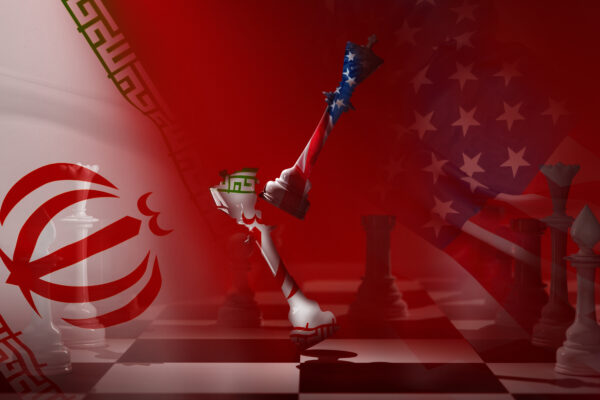




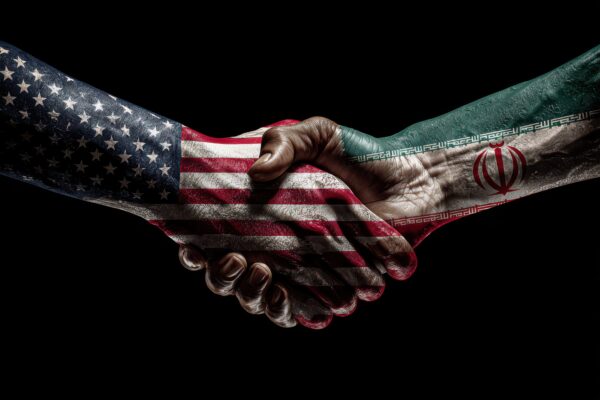
President Donald Trump has once again announced what appears to be a major breakthrough with Iran. According to reports, Washington and Tehran are moving toward a 60-day Memorandum of Understanding (MoU) that could extend a ceasefire, reopen the Strait of Hormuz, and launch negotiations over Iran’s nuclear program. Yet before anyone celebrates the arrival of peace, one fact stands out: there is still no clear confirmation from Iranian officials that a final 60-day MoU has actually been agreed upon.
That distinction matters.
Since the start of the war on February 28, 2026, there have been numerous announcements of imminent agreements, breakthroughs, and diplomatic understandings involving Iran, only for negotiations to stall, collapse, or become mired in disputes over implementation. Even now, conflicting statements from Washington and Tehran suggest that significant gaps remain. According to Axios, Iranian Foreign Minister Abbas Araghchi said a deal was “closer than ever,” while also cautioning against speculation before any final agreement is completed.
Hardliners reject the emerging MoU. Iranian lawmaker Mahmoud Nabavian criticized the agreement, saying, “After seeing the text of the agreement, I must say that compared with the two previous versions, it is more damaging and Iran’s retreats have also increased. . . An agreement cooked up by the architects of the disgraceful JCPOA is certainly a pure loss” (Iran International Live).
Iran’s Defense Ministry spokesperson Reza Talaei-Nik warned that Iran’s armed forces are at a “very high level of readiness” to confront the “enemy” and that it is “stronger than before”. . . “ready with fingers on the trigger” because the Islamic Republic demands “revenge for the martyrs” (Iran International Live).
The timing of this potential agreement is noteworthy. The diplomatic push comes immediately after two nights of intense U.S. bombing operations ordered by President Trump. Earlier on June 11, Trump dramatically escalated pressure by threatening to strike Iran’s vital Kharg Island oil-export terminal, siege the island, and effectively take control of key portions of Iran’s oil industry if Tehran continued its aggressive actions (AP News).
The MoU would reportedly extend the ceasefire for 60 days, reopen maritime traffic through the Strait of Hormuz, and begin technical negotiations over Iran’s nuclear program (Algemeiner). However, the framework appears to leave other major issues unresolved.
Most notably, there is little indication that the agreement directly addresses Iran’s ballistic missile program. Nuclear concerns dominate the reported discussions, but missiles remain one of the regime’s most significant military capabilities. Likewise, there is no evidence that Iran has agreed to permanently renounce its jihadist ambitions against Israel, the United States, or American allies.
The reason is straightforward: the Iranian regime itself remains in power. The Islamic Republic’s governing structure and ideological foundations have not changed. Any ceasefire may address current hostilities, but it does not necessarily alter the strategic worldview that has shaped Tehran’s policies for decades.
This ideological permanence is manifested in the fact that Iran remains completely determined to preserve and insulate Hezbollah in Lebanon from permanent disarmament, viewing its proxy network as an existential, non-negotiable defensive line. Araghchi confirmed Iran’s commitment to Hezbollah, stating, “We will not forget Lebanon’s Hezbollah in any agreement,” because the terrorist organization fought alongside Iran. . . adding, the Islamic Republic “will never leave Hezbollah alone” (Iran International Live).
Israel’s position is equally significant. Prime Minister Benjamin Netanyahu emphasized that Israel is not a party to the emerging agreement while reiterating his commitment that Iran will never obtain nuclear weapons (JNS). This means that even if Washington and Tehran sign an MoU, Israel retains its own security calculations and may not view the agreement as sufficient protection against future threats.
Perhaps the most telling sign of uncertainty came when President Trump publicly rejected descriptions of the deal circulating in Iranian media. Trump stated that the leaked terms “bear no relation to the truth” and insisted that Iran’s version of events did not reflect what had actually been agreed upon (Reuters).
Those comments highlight the central question facing observers today: Is this ceasefire deal for real? At the moment, the answer remains uncertain. A framework may be emerging, negotiations may be advancing, and a signing ceremony may even be under discussion. But until the Iranian clerical apparatus is fundamentally dismantled and its jihadist expansionism is permanently neutralized, any document signed is not a pathway to peace—it is merely a brief intermission in an existential war.
Blessors of Israel continues to closely monitor this developing story. Please pray for our leadership, troops, Israel and her people, along with the Iranian people.
Dr. Matthew Dodd, Executive Director | June 12, 2026