


Edge of the Abyss

Edge of the Abyss

Tensions between the United States and Iran appear to have escalated following yesterday’s meeting in Geneva as military maneuvering, political rhetoric, and internal unrest converged into a volatile geopolitical moment that could reshape the Middle East.

According to Axios, President Donald Trump is weighing potential military strikes on Iran’s nuclear infrastructure while diplomatic efforts remain fragile. The report notes that, “A U.S. military operation in Iran would likely be massive, weeks-long campaign that would look more like full-fledged war than last month’s pinpoint operation in Venezuela.” The report adds that “More than 150 U.S. military cargo flights have moved weapons systems and ammunition to the Middle East. Just in the past 24 hours, another 50 fighter jets – F-35s, F-22s and F-16s” are headed to the region.

Iranian officials responded defiantly. Yesterday, an senior Iranian Revolutionary Guard Corps (IRGC) general declared that even if the United States deployed its “entire carrier fleet” against Iran, it “can’t do a damn thing” (Breitbart). The blunt rhetoric underscores Tehran’s attempt to project strength, even as the region braces for potential escalation.

Israel, meanwhile, is preparing for possible fallout. Israel Hayom cited Israeli defense assessments warning that Iran would “likely target Israel if the U.S. launches a strike.” The Israel Defense Forces (IDF) are reportedly reinforcing readiness across multiple fronts, anticipating retaliation through Iranian proxies or direct missile attacks.

At the same time, Israeli leaders are reinforcing their strategic posture with support from the White House. Speaking at the Munich Security Conference, U.S. Secretary of State Marco Rubio emphasized that Washington seeks “a powerful, self-reliant Israel” (Israel Hayom). The message signals continued U.S. support while encouraging Israel’s independent defensive capabilities in an increasingly unstable environment.

On the ground inside Iran, unrest is adding another layer of unpredictability. Reuters reports that mourning ceremonies tied to the January anti-government protests which left thousands dead have sparked renewed crackdowns by Iranian authorities, with echoes of the 1979 Revolution. Security forces have reportedly moved to suppress gatherings, reflecting regime concerns that public dissent could intensify amid external pressure.

Iran’s regional posture also remains a central concern. The Jerusalem Post reports that satellite images reveal that Iran is rapidly repairing and fortifying nuclear and military sites. The Jerusalem Post notes, “Images also show that Iran has buried tunnel entrances at a nuclear site bombed by the U.S. during Israel’s 12-day war with Iran last year.”

The convergence of these developments paints a stark picture: diplomatic channels are narrowing, military preparations are expanding, and domestic tensions inside Iran are rising.

With Washington signaling possible action, Tehran projecting defiance, and Israel preparing for retaliation, the Middle East stands at a precarious juncture. Whether this moment yields renewed negotiations or armed confrontation may depend on choices made not in public speeches, but behind closed doors — and on how each side calculates the risks of crossing a line from brinkmanship into war.

Blessors of Israel is closing monitoring this developing story to keep you informed so that you know how to pray Israel, President Trump, and the Iranian people.

Dr. Matthew Dodd, Executive Director | February 18, 2026

On the Brink or Breakthrough? Inside the High-Stakes Iran Nuclear Talks

As diplomats gather in Geneva on Tuesday, the world watches a familiar but dangerous chessboard reset itself. The United States and Iran are back in negotiations over Tehran’s nuclear program—but this time, the stakes feel higher, the rhetoric sharper, and the regional tensions more combustible than ever.

President Donald Trump signaled cautious optimism ahead of the talks on Monday, declaring that “they want to make a deal,” while warning the Iranian regime that it does not want to face the “consequences” of failure (Breitbart). Trump suggested progress was possible but made clear that American red lines remain firm.

After the talks, Vice President JD Vance said, “some progress” has been made, yet Iran is still “unwilling to accept US red lines” (The Times of Israel). That tension—between momentum and mistrust—defines the current diplomatic moment.

Diplomacy Under the Shadow of Threats

Even as negotiators speak of progress, the rhetoric from Tehran has been far from conciliatory. Iran’s Supreme Leader Ayatollah Ali Khamenei reportedly issued threats toward U.S. aircraft carriers ahead of the Geneva talks (Israel Hayom). Meanwhile, Iran’s Foreign Minister, Abbas Araghchi, insisted that the United States “must stop threatening to attack Iran” following discussions (The Times of Israel).

The message from Tehran is clear: negotiations cannot proceed under what it views as coercion. Yet Washington’s position appears equally resolute—any agreement must meaningfully curb Iran’s nuclear ambitions.

In a notable diplomatic move, Araghchi met with the head of the United Nations’ nuclear watchdog, the International Atomic Energy Agency (IAEA), before the second round of U.S. talks (The Times of Israel). The involvement of the IAEA underscores the technical and verification challenges at the heart of any agreement.

Military Maneuvers Raise the Temperature

While diplomacy unfolds in Switzerland, military signals are being sent across the Middle East.

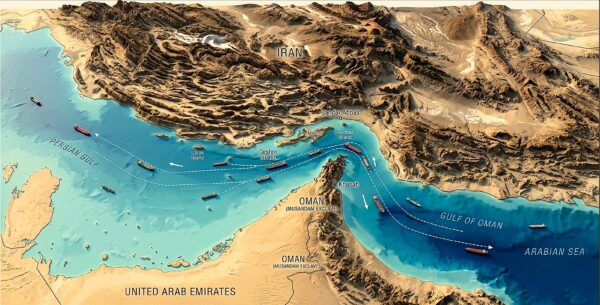
On Tuesday, Iran conducted live fire naval drills that included temporarily closing the Strait of Hormuz, with Russia and China reportedly set to join exercises (Israel Hayom). The Strait is one of the world’s most critical oil chokepoints. Even symbolic disruptions there send tremors through global markets.

At the same time, Israel is strengthening its defenses. The Israeli government is set to deploy its advanced Arrow-4 missile defense system, significantly boosting interception capabilities against ballistic threats (Israel Hayom). According to a defense report, Israeli officials are closely monitoring the talks and preparing for all contingencies (The Jerusalem Post).

Indirect Channels, Direct Stakes

Trump announced that he will be indirectly involved in the negotiations rather than personally leading them (JNS). This layered diplomatic approach may allow room for maneuvering while maintaining political distance if talks falter.

Sources described the Geneva discussions as serious but fragile. One report noted that while there has been progress, deep gaps remain (Axios). The BBC similarly characterized the talks as cautious and complex, reflecting years of distrust and competing strategic priorities.

Behind closed doors, negotiators are grappling with core questions:

  • How much uranium enrichment will Iran be permitted?
  • What inspection mechanisms will be implemented?
  • Which sanctions might be lifted—and when?

Pressure From Within Iran

Complicating matters further, Iran’s leadership faces mounting internal pressure. Reports indicate new anti-government chants across Iran last Sunday following major rallies abroad (The Times of Israel). Public dissatisfaction—driven by economic hardship and political repression—adds another layer of urgency to the regime’s calculations.

Relief of Sanctions could ease domestic tensions. But making significant nuclear concessions risks appearing weak before hardliners.

For Iran’s leaders, the negotiations are not only about uranium centrifuges—they are about political survival.

A Narrow Path Forward

The pattern is familiar: threats paired with talks, drills alongside diplomacy, progress shadowed by skepticism.

Trump’s warning that Iran does not want the “consequences” of failure echoes through the negotiations. Yet so does his assertion that Tehran “wants to make a deal.”

If an agreement emerges, it could stabilize a volatile region and reduce the immediate risk of military confrontation. If talks collapse, the consequences could reverberate globally—impacting energy markets, regional security, and the broader balance of power.

Blessors of Israel is closing monitoring this developing story to keep you informed so that you know how to pray Israel, President Trump, and the Iranian people.

Dr. Matthew Dodd, Executive Director | February 17, 2026

Trump’s Aircraft Carrier Diplomacy

As tensions surge between the United States and the Islamic Republic of Iran, President Donald Trump has revived a strategy that blends overwhelming military presence with public offers of negotiation. The deployment of not one but two American aircraft carriers to the Middle East signals what might best be described as “aircraft carrier diplomacy” — a calculated projection of strength designed to deter aggression while forcing adversaries to reconsider their negotiation options.

A Second Carrier Heads to the Region

The Pentagon confirmed that a second U.S. aircraft carrier, the U.S.S. Gerald R. Ford — the largest and most advanced aircraft carrier in the world — is being deployed to the Middle East amid escalating tensions with Iran (Reuters). The Ford will join the U.S.S. Abraham Lincoln and its strike group, which includes fighter jets, Tomahawk missiles and several ships (Axios). Currently, the Ford is in the Caribbean, so it will take approximately three to four weeks to arrive in the Middle East region.

According to Reuters, the decision reflects growing concerns in Washington about Iran’s posture and the fragile security environment in the Middle East. The Associated Press reported that Trump has coupled these deployments with renewed warnings directed at Tehran. The message is unmistakable: America is prepared.

The Ford’s deployment is not symbolic. As Reuters noted, it represents one of the most powerful instruments of American military projection. Its presence dramatically increases U.S. strike capabilities, sending a signal not only to Tehran but to its proxies throughout the region.

“Fear Is a Powerful Motivator”

President Trump has been candid about the logic behind the deployment. On Friday, while speaking to U.S. troops at the Fort Bragg Army base in North Carolina, Trump declared that “fear” is a powerful motivator in dealing with adversaries, particularly in the context of “difficult” talks with Iran (Reuters).

The statement underscores Trump’s long-standing belief that deterrence depends on credibility. As Israel National News reported, Trump has maintained that strength prevents war rather than provokes it. When asked about the decision to send the second carrier, Trump said, the aircraft carrier was sent “in case we don’t make a deal, we’ll need it. If we don’t have a deal, we’ll need it. We have one out there that just arrived. If we need it, we have it ready. A big, very big force.”

“I’d Love to Make a Deal”

Even as U.S. warships steam toward the region, Trump has emphasized his preference for diplomacy. “I’d love to make a deal,” he said, while also noting that Iran “has been difficult” (The Times of Israel).

This duality — offering talks while escalating military pressure — is central to aircraft carrier diplomacy. The goal is to shift the balance of leverage. By increasing Iran’s perception of risk, Washington hopes to strengthen its negotiating position.

Axios reported that the administration views the carrier deployment as a warning shot intended to encourage Iran to abandon its nuclear weapon ambitions and ballistic missiles. The presence of two carrier strike groups dramatically alters the military equation in the region, reminding Tehran of the immense disparity in conventional power.

Iran’s Threats and Capabilities

Tehran, for its part, has not remained silent. Iranian officials have repeatedly warned that U.S. bases could be targeted if conflict erupts (World Israel News). And while Iran’s military capabilities have been degraded following the 12-day war with Israel last June, it still retains significant capabilities (The Times of Israel). This assessment highlights why Washington is unwilling to rely on optimism alone. Even a weakened Iran is a dangerous Iran.

Meanwhile, internal uncertainty in Tehran has fueled speculation about Supreme Leader Ayatollah Ali Khamenei’s whereabouts, adding another layer of unpredictability (World Israel News).

Strength and the Possibility of Peace

Trump’s aircraft carrier diplomacy ultimately hinges on whether Iran interprets the deployments as a warning or a provocation. If Tehran believes Washington is prepared and resolved, negotiations may prove fruitful. If it perceives bluff or instability, escalation could follow.

Blessors of Israel is closing monitoring this developing story to keep you informed so that you know how to pray Israel, President Trump, and the Iranian people.

Dr. Matthew Dodd, Executive Director | February 13, 2026

Red Lines and Rising Tensions

Tensions between Washington, Jerusalem, and Tehran escalated today as leaders exchanged warnings, weighed military options, and confronted growing cyber and regional threats.

President Donald Trump met with Israeli Prime Minister Benjamin Netanyahu at the White House to discuss Iran’s nuclear ambitions, but signaled that no final decisions have been made. “Nothing definitive,” Trump said following the meeting, underscoring that while options remain on the table, diplomacy has not been ruled out (JNS). According to reports, the talks included discussions about the possibility of military strikes on Iranian nuclear facilities if negotiations fail (Axios).

Meanwhile, Iran marked the anniversary of its 1979 Islamic Revolution with fiery rhetoric and provocative displays. Crowds chanted “Death to America,” burned U.S. and Israeli flags, and displayed ballistic missiles and mock coffins representing American and Israeli leaders during state-sponsored rallies (Breitbart). Iranian officials reiterated that their missile program is “nonnegotiable,” signaling no willingness to curb weapons development despite mounting international pressure (The Times of Israel).

On Tuesday, US President Donald Trump told N12 that the United States is ready to attack Iran in case the negotiations with the Islamic Republic fail, and that he was considering sending a second aircraft carrier strike group to the Middle East.

“Either we will make a deal, or we will have to do something very tough like last time,” Trump told N12, who also warned that the US has “an armada that is heading there and another one might be going” (The Jerusalem Post).

Beyond conventional threats, Israel is also battling an intensified cyber war. Defense officials revealed that hundreds of Iranian cyberattacks have been foiled in recent months, targeting critical infrastructure and strategic systems (The Times of Israel). The digital battlefield has become a central front in the broader confrontation.

At the same time, concerns are mounting over Iran’s financial support for its regional proxies. Reports indicate that Iranian officials have been transporting funds in personal luggage to rebuild Hezbollah’s capabilities in Lebanon, circumventing sanctions and financial scrutiny (World Israel News).

Taken together, the developments paint a picture of mounting friction: stalled diplomacy, public defiance from Tehran, expanding proxy funding, and a shadow war in cyberspace. While President Trump emphasized that no final decision has been reached, the tone from all sides suggests tensions are rising as Iran threatens to cross U.S. and Israeli red lines.

Blessors of Israel is closing monitoring this developing story to keep you informed so that you know how to pray and stand with Israel and her people.

Dr. Matthew Dodd, Executive Director | February 11, 2026

Countdown on Iran

A flurry of diplomatic movement, intelligence warnings, and satellite imagery is converging into one of the most consequential moments in the long-running standoff between Israel, Iran, and the United States. As Israeli Prime Minister Benjamin Netanyahu arrives in Washington for talks with U.S. President Donald Trump on Wednesday, Israeli officials are signaling that the window to prevent a dramatic escalation may be narrowing fast.

According to multiple Israeli security assessments, Iran is accelerating both its missile and nuclear-related activities. Israeli defense officials warn that Tehran could expand its ballistic missile arsenal to as many as 2,000 missiles within weeks if unchecked, a development that would significantly alter the regional balance of power and heighten the threat to Israel and U.S. allies in the Middle East (World Israel News).

Recent satellite images appear to reinforce those concerns. Imagery analyzed by Israeli and Western sources shows Iran sealing underground tunnels and reinforcing air defenses around the Isfahan nuclear facility, a key site in its nuclear infrastructure. Analysts interpret the moves as preparations for a potential strike or an attempt to shield sensitive activities from aerial surveillance and attack (JNS).

Against this backdrop, Netanyahu landed in the United States ahead of a critical White House meeting with Trump, where Iran is expected to dominate the agenda (The Times of Israel). Israeli officials say Netanyahu plans to present fresh intelligence on Iran’s missile buildup and defensive preparations, underscoring Israel’s belief that Tehran is edging closer to a strategic breakout (i24 News).

Trump, for his part, has publicly stated that Netanyahu wants “a good deal” with Iran, while suggesting that current nuclear talks differ from past efforts. Still, skepticism remains high in Jerusalem about whether diplomacy alone can halt Iran’s progress (The Times of Israel). Sources close to the Israeli leader also indicate he will tell Trump that phase two of the Gaza ceasefire and hostage framework is effectively stalled, adding another layer of urgency and complexity to the discussions (The Times of Israel).

Meanwhile, Iran is signaling both readiness and defiance. A top Iranian adviser has visited Oman, which is once again acting as a mediator as Tehran and Washington prepare for renewed talks (Reuters). At the same time, Iranian media and analysts describe what they call a “show of force,” aimed at deterring military action and strengthening Tehran’s bargaining position (Israel Hayom).

Israeli and international outlets report that Iran has also increased security and engineering work around missile and nuclear sites, including in Isfahan, reinforcing Israeli claims that Tehran is bracing for potential confrontation even as it engages in diplomacy (The Jerusalem Post).

Please join me in praying for Israel along with President Trump and his advisors as they negotiate with the nefarious Iranian regime.

Dr. Matthew Dodd, Executive Director | February 10, 2026

Is the "Art of the Deal" Closing in on Iran?

“Just remember, the Iranians never won a war, but never lost a negotiation!”

This insightful warning, posted by U.S. President Donald Trump on July 29, 2019 (The Jerusalem Post), has long defined the West’s cautious approach to the Islamic Republic. For decades, Tehran has been a master of the diplomatic stall—leveraging talk to stall while advancing its regional ambitions. However, as indirect talks between Washington and Tehran unfolded in Oman this week, the tide appears to be shifting.

Pressure in the Palace, Panic in the Streets

The current diplomatic dance in Muscat isn’t happening in a vacuum. It is unfolding against a backdrop of internal decay and external military posture that has left the Iranian regime visibly shaken.

Recent reports suggest that the “negotiation masters” are operating from a position of unprecedented weakness. According to U.S. Treasury Secretary Scott Bessent, the Iranian leadership is gripped by the fear that their end may be near. He described a scene of “rats leaving the ship,” with intelligence tracking the ruling elite wiring “tens of millions of dollars” out of the country as the economy faces total collapse (Breitbart).

A Tale of Two Priorities: Missiles Over Nukes

While the diplomats in Oman ostensibly focused on nuclear “talks about holding talks” (Breitbart) satellite imagery tells a different story about Iran’s immediate fears.

New data reveals that Tehran has prioritized the rapid repair of ballistic missile sites damaged during the recent “12-Day War,” while leaving major nuclear facilities struck by Israel and the U.S. in a state of disrepair (i24 News). This suggests the regime is bracing for an immediate kinetic conflict rather than a long-term nuclear standoff, signaling that the U.S. “maximum pressure” campaign has forced them to prioritize survival over strategy.

Jared Kushner’s “Day After” Plan

Another significant development is the revelation of a “day after” contingency plan being spearheaded by President Trump’s senior advisor and son-in-law, Jared Kushner. World Israel News reports, “Sources familiar with the matter indicate that Kushner is deeply involved in assembling a group of Iranian-American business leaders. This group is intended to serve as a civilian advisory body or a transitional framework should the government in Tehran become destabilized. While the initiative is being seriously evaluated, sources noted it has not yet matured into an official policy decision. A second source suggested the administration is considering a summit of Iranian opposition figures to be held in Palm Beach, Florida, near the Mar-a-Lago estate, to further explore temporary civilian leadership options.”

Please join me in praying for President Trump and his advisors to have wisdom as they negotiate with the nefarious Iranian regime. Also remember to pray for Israel and her people.

Dr. Matthew Dodd, Executive Director | February 6, 2026

Iran Talks Resume as Warnings Mount

After days of diplomatic confusion and rising rhetoric, U.S.–Iran nuclear talks are back on — but under heavy clouds of mistrust and pressure. What was first reported as a canceled negotiation has now been revived, with officials confirming that U.S. and Iranian representatives are set to meet this Friday in Oman. The sudden reversal underscores both the urgency of the moment and the fragility of diplomacy as stark warnings, rigid red lines, and regional tensions continue to mount.

Talks Back On — in Oman

Several Arab states reportedly lobbied the U.S. administration to preserve diplomatic engagement, and Iran confirmed that nuclear discussions are now set to occur in Muscat, Oman on Friday. The change of venue from Turkey comes at Tehran’s request and reflects a desire to narrow the agenda to the nuclear issue alone, with just Iran and the U.S. expected to participate (Axios).

This development marks a shift from earlier reports that talks had fallen apart after Tehran pushed for changes in both the site and format — including excluding other regional countries from participation (Israel Hayom).

Clashing Red Lines

A key sticking point remains the scope of what is on the table. Iranian leaders continue to insist that negotiations should focus strictly on their nuclear program. But U.S. officials, including Secretary of State Marco Rubio, have emphasized that broader issues must be discussed — including Iran’s ballistic missile arsenal, support for proxy terrorists groups across the Middle East, and its human rights record (The Times of Israel).

Iran’s insistence on a narrow agenda reflects Tehran’s long-standing position that matters outside nuclear activities are sovereign internal affairs or unrelated to the core dispute. This includes its ballistic missile program, which remains a major concern for U.S. policymakers and regional partners alike (The Jerusalem Post).

Trump’s Warning

Adding to the high-stakes atmosphere, U.S. President Donald Trump said Iran’s Supreme Leader Ayatollah Ali Khamenei “should be very worried” amid the negotiation uncertainty — comments reflecting Washington’s tough stance and willingness to use diplomacy or pressure to curb Tehran’s capabilities (The Times of Israel).

Trump framed the broader effort as essential to maintaining stability, saying that past military actions to degrade Iran’s nuclear infrastructure were necessary for peace in the Middle East (The Jerusalem Post).

Diplomatic Ebb and Flow

This diplomatic ebb and flow follows earlier reports of planned talks being canceled when Tehran pushed back against U.S. demands on venue and format — a move that briefly suggested negotiations were collapsing. At one point, senior U.S. officials conveyed that the discussions could not proceed under the Iranian terms, which had sought a bilateral, nuclear-only format in Oman (Israel National News).

Driven by political and regional pressures, however, both sides have ultimately agreed to keep channels open, choosing Oman as the current venue to revive dialogue (Axios).

What This Means for the Region

The renewed talks come amid broader geopolitical tension: Iran’s nuclear program, its role in supporting proxy terrorist groups, and ongoing regional conflicts remain flashpoints that could easily spiral into wider confrontation if diplomacy falters entirely.

Israeli officials, watching these developments closely, have voiced skepticism about Iran’s intentions. Concerns that Tehran is using the prospect of talks as leverage while continuing to advance its nuclear capabilities. From Jerusalem’s perspective, delays and cancellations only reinforce fears that time is working in Iran’s favor. The Times of Israel reports that Israel’s security cabinet is scheduled to meet Thursday at 4 p.m. though ministers have not been told the purpose for the meeting.

The broader regional context adds another layer of urgency. Ongoing conflicts involving Iranian-backed terrorist groups continue to destabilize the Middle East, complicating any attempt to isolate the nuclear issue from Iran’s wider strategy. In Gaza, for example, Israeli officials have accused Hamas — a terrorist organization backed by Iran — of violating ceasefire terms by using ambulances, schools, and hospitals for military purposes, highlighting the humanitarian and security consequences of proxy warfare (Fox News).

Wait and See

For now, the Friday meeting represents a tentative but meaningful step back to the table. It illustrates not only how deeply divided the United States and Iran remain, but also how diplomatic engagement — even under strain — continues to be pursued by leaders wary of the consequences if talks collapse.

As the world watches, this Friday’s session in Oman may either break the diplomatic logjam or underscore just how wide the gap between Tehran and Washington really is.

Please join me in praying for President Trump and his advisors to have wisdom as they negotiate with the Iranian regime. Also remember to pray for Israel and her people.

Dr. Matthew Dodd, Executive Director | February 4, 2026

US–Iran Talks Resume Amid Rising Military Tensions and Stark Warnings

Diplomatic efforts between the United States and Iran are moving forward under the shadow of escalating military incidents and sharpened rhetoric, underscoring the fragility of the current moment in Middle Eastern geopolitics. While both sides signal a willingness to negotiate, recent confrontations at sea and conflicting expectations over the scope of talks highlight how easily diplomacy could unravel.

According to multiple reports, US–Iran talks remain scheduled for Friday despite a series of military encounters, including the downing of an Iranian drone near US naval assets in the region. The White House confirmed that negotiations were still on track even after an Iranian Shahed-139 drone was shot down by a U.S. F-35 fighter jet while approaching a US aircraft carrier, an incident that significantly raised tensions between the two adversaries (The Times of Israel).

White House press secretary Karoline Leavitt said on Tuesday afternoon that CENTCOM “did make the decision to shoot down that Iranian drone” because it was “acting aggressively towards our USS Lincoln.

Leavitt added that President Trump “remains committed to always pursuing diplomacy first — but in order for diplomacy to work, of course, it takes two to tango”(Breitbart).

President Donald Trump publicly warned that “bad things will happen” if no deal is reached, even as he confirmed that negotiations with Iran are actively underway (The Times of Israel).

From Tehran, Iranian President Masoud Pezeshkian has called for what he described as “fair and equitable” negotiations with Washington, emphasizing that Iran will not accept talks perceived as one-sided or coercive (The Times of Israel). Iranian officials have reportedly sought to change the location and reshape the format of discussions to limit the involvement of other countries, signaling a preference for more direct engagement with the United States (The Times of Israel, Axios).

Israel, closely monitoring the negotiations, has reportedly urged Washington to demand comprehensive concessions from Iran, including an end to its nuclear and ballistic missile programs and the cessation of funding for regional proxy groups (The Times of Israel). Israeli security officials and analysts have cautioned that a limited agreement focused solely on nuclear enrichment could leave broader regional threats unresolved (The Times of Israel).

Regional leaders have also weighed in. The United Arab Emirates has called for a long-term and durable solution to the U.S.–Iran standoff, warning that short-term deals or repeated cycles of escalation risk further destabilizing the Middle East (Reuters). As talks proceed, the combination of military confrontations, political maneuvering, and deep-seated mistrust suggests that the path to a durable agreement will be narrow and uncertain. Whether diplomacy can overcome confrontation remains unclear, but the consequences for regional stability and global security are significant.

Please join me in praying for President Trump and his advisors to have wisdom as they negotiate with the Iranian regime. Also remember to pray for Israel and her people.

Dr. Matthew Dodd, Executive Director | February 3, 2026

Iran Threatens Israel as U.S. Deadline Nears

The confrontation between the United States and Iran has intensified sharply, with President Donald Trump issuing ultimatums over Tehran’s nuclear program while Iranian leaders warn that any U.S. military action would trigger retaliation against Israel — a scenario Israeli officials say would be met with a decisive, unprecedented response.

Today, President Trump confirmed he has directly communicated with Iranian officials, setting firm demands related to Iran’s nuclear activities and its violent suppression of domestic protests. Trump warned that failure to comply could lead to military action, emphasizing that Iran has been given a deadline to accept a deal or face serious consequences (The Times of Israel).

Iran, however, has rejected what it calls negotiations under threat. Iranian Foreign MinisterAbbas Araghchi stated that while Tehran is prepared to discuss nuclear matters, its defense and missilecapabilities are “never up for negotiation.”Araghchi reiterated that Iran will not submit to pressure or coercion from Washington (Israel National News).

In parallel with diplomatic friction, Iran has issued stark regional warnings. Iranian officials have made clear that if the United States launches an attack on Iran, Israel would be targeted in retaliation, dramatically raising the stakes for the entire Middle East. Israeli defense leaders, in response, have stated unequivocally that any Iranian strike on Israel would trigger an immediate and forceful Israeli counterattack, underscoring the risk of a wider regional war (The Times of Israel).

On the nuclear front, there are rising concerns about Iran’s efforts to salvage it nuclear program. The Associated Press reports, “The images from Planet Labs PBC show roofs have been built over two damaged buildings at the Isfahan and Natanz facilities, the first major activity noticeable by satellite at any of the country’s stricken nuclear sites since Israel’s 12-day war with Iran in June. Those coverings block satellites from seeing what’s happening on the ground — right now the only way for inspectors from the International Atomic Energy Agency to monitor the sites as Iran has prevented access.”

The military dimension of the crisis has also intensified. A U.S. missile destroyer, the U.S.S. Delbert D. Black, has docked in Eilat, reinforcing American naval presence near Israel amid growing fears of escalation. Israeli and American officials view the deployment as both a defensive measure and a signal of deterrence to Tehran (The Times of Israel).

Meanwhile, Iran has sought to strengthen ties with global powers opposed to U.S. pressure. On Friday, Russian President Vladimir Putin met with senior Iranian security official Ali Larijani, signaling continued cooperation between Moscow and Tehran as Iran faces mounting sanctions and isolation (The Times of Israel).

The Trump administration has also expanded its pressure campaign by imposing new sanctions on Iranian officials accused of orchestrating violent crackdowns on nationwide protests. The U.S. Treasury Department designated commanders in the Islamic Revolutionary Guard Corps, financial backers of the IRGC and Iran’s interior minister, Eskandar Momeni. “Momeni is responsible for organizing domestic security services and oversees the law enforcement forces of the Islamic Republic of Iran, whose actions have led to mass killings, arrests and forced disappearances,” the department stated (JNS).

Despite the rising tensions, Iranian diplomats have hinted at limited openness to talks during meetings in Istanbul, though Turkish officials accused Israel of fueling instability by encouraging confrontation. The competing narratives illustrate how fragile the situation has become, with diplomacy, deterrence, and threats unfolding simultaneously (i24News).

As President Trump presses Iran to accept his terms and Tehran draws firm red lines, Israel now stands squarely at the center of a rapidly evolving crisis. With all sides warning of retaliation, the margin for miscalculation continues to narrow — raising fears that a single strike could ignite a far broader conflict across the region.

Please join me in praying for Israel, the people of Iran, and the leaders of the United States.

Dr. Matthew Dodd, Executive Director | January 30, 2026

The Whirlwind Gathers: Iran, Israel, and the Middle East Bracing for War

As tensions surge across the Middle East, the convergence of Iranian threats, U.S. military positioning, Israeli security preparations, and growing international alarm has created one of the most volatile moments the region has faced in years. What is unfolding is not a single crisis, but a convergence of military, political, and spiritual fault lines that could reshape the future of the region—and beyond.

Iran’s Escalating Threats Against Israel and the West

Iranian officials have issued increasingly explicit threats in recent days, warning that any U.S. strike on Iranian territory would trigger a devastating response. Senior Iranian figures have openly declared that the “heart of Tel Aviv” would be targeted should America take military action, underscoring Israel’s central role in Tehran’s calculus (The Times of Israel).

These threats are not rhetorical alone. Iran has launched large-scale naval drills in the Strait of Hormuz, a vital artery for global oil shipments, signaling its readiness to disrupt the world economy if conflict erupts (Israel Hayom). Iran’s first Vice President, Mohammad Reza Aref, said, “Today we must be prepared for a state of war. Our strategy is that we will never start a war, but if it is imposed, we will defend ourselves” (The Times of Israel).

Meanwhile, Iranian state media has issued a propaganda video depicting an American aircraft carrier being struck by ballistic missiles along with the caption, “If you sow the wind, you will reap the whirlwind” (World Israel News).

The United States Weighs Military Options

According to multiple reports, U.S. President Donald Trump is actively reviewing military strike options against Iran as part of a strategy intended not only to curb Iran’s nuclear ambitions, but also to create conditions that could lead to regime change (Reuters; The Times of Israel). American officials believe renewed pressure could ignite further internal unrest inside Iran, where the regime has already been shaken by sustained protests.

U.S. forces are reportedly conducting readiness exercises throughout the Middle East as a show of preparedness, while a massive American naval presence continues to assemble in the region. U.S. Central Command (CENTCOM) announced on Tuesday that the Ninth Air Force will conduct a “multi-day readiness exercise” to “demonstrate the ability to deploy, disperse, and sustain combat airpower” (Breitbart). Defense officials have emphasized that the U.S. military is fully capable of carrying out the president’s threats if diplomacy fails. U.S. Secretary of War, Pete Hegseth, said, “We will be prepared to deliver whatever this president expects from the War Department” (The Times of Israel).

At the same time, analysts caution that air power alone may not be sufficient to topple Iran’s ruling system, raising concerns about escalation without resolution (i24NEWS).

Israel on High Alert

Israel is preparing for the possibility of Iranian retaliation even if any U.S. strike is limited in scope. Prime Minister Benjamin Netanyahu has convened high-level security consultations and held classified briefings as Israeli defense officials assess potential scenarios (The Times of Israel).

Israeli intelligence reportedly believes Iran could act directly or through regional proxies, including Hezbollah, in response to Western action. Israel’s security establishment is operating under the assumption that escalation is no longer theoretical, but imminent (Ynet News).

Iran’s Internal Crackdown and Growing Isolation

Inside Iran, the regime is tightening its grip. Iranian authorities have arrested thousands in a sweeping campaign aimed at suppressing dissent following months of unrest fueled by economic collapse, political repression, and public anger toward the ruling elite (Reuters).

International pressure is also mounting. The European Union is preparing to formally designate Iran’s Islamic Revolutionary Guard Corps as a terrorist organization, a move driven by Tehran’s violent suppression of protests and its external aggression (The Times of Israel). Such a designation would further isolate Iran economically and diplomatically.

Russia and Turkey have reportedly attempted to mediate, seeking renewed U.S.–Iran talks in an effort to avert open conflict, though success remains uncertain amid hardened positions on all sides (The Times of Israel).

The Middle East at a Crossroads

From Jerusalem to Washington, Tehran to Brussels, leaders appear to recognize that the coming days may define the trajectory of the Middle East for years to come. Iran’s threats, Israel’s vigilance, America’s military readiness, and the world’s anxious watchfulness all point to a narrowing window for de-escalation.

For those who watch the region through both a geopolitical and biblical lens, these developments resonate deeply. The concentration of hostility toward Israel, the alignment of powerful nations, and the mounting pressure on Jerusalem echo warnings long preserved in Scripture.

As the prophet Zechariah wrote, “I am going to make Jerusalem a cup that sends all the surrounding peoples reeling” (Zechariah 12:2).

Whether diplomacy prevails or conflict erupts, one truth remains clear: the Middle East stands at a pivotal moment, with all eyes on Israel as the stage is being set for the fulfillment of Bible prophecy.

Please join me in praying for Israel, the Iranian people and the leaders of the United States.

Dr. Matthew Dodd, Executive Director | January 29, 2026