


The Alliance of Russia and China

Vladimir Putin recently invited Xi Jinping, his Chinese counterpart, to make a state visit to Russia in the next several months. Facing growing international isolation over the war in Ukraine, Moscow is seeking to deepen its ties with China. “We are expecting you, Mr. Chairman, dear friend, we are expecting you next spring on a state visit to Moscow,” Putin told Xi in a statement recently broadcast on Russian state television.

For his part, Xi is leading China toward an “increase in strategic cooperation with Russia, to be global partners for the benefit of the peoples of our countries and in the interest of stability around the world.”

Analysts watch closely, however, for any sign that China is reevaluating its relationship to Putin as Russia struggles in its war against Ukraine.  “Everyone wants to see if Xi is having buyer’s remorse about Putin,” said Alexander Gabuev, a senior fellow at the Carnegie Endowment for International Peace. “But today’s call indicates that ties between two countries will continue to grow in the coming years,” Gabuev added. Gabuev pointed to the economic cooperation between the two countries since the war with Ukraine started, with China now accounting for more than a quarter of Russia’s total imports, according to the Washington-based Institute of International Finance.

However, the growing alliance between Russia and China also has biblical prophetic significance.  In the latter days, a massive army will come against Israel. Armies will come from the north, south and east. In other words, the armies coming against Israel in that battle will be a coalition of forces such as the world had never seen. The current realigning of nations will have greater significance as a great divide between Russia and China and the western nations increases.

Since the close of WWII, China has mostly refrained from direct military action. However, signs of growing animosity with the west are unmistakable. Former US national security advisor, H.R. McMaster recently stated that China’s leader, Xi Jinping, “is preparing the Chinese people for war.” He added that the leader of China has been posturing aggressively in recent speeches and making his intent clear. “China has become increasingly aggressive, not only from an economic and financial perspective and a wolf-warrior-diplomacy perspective, but physically, with its military, McMaster added.

Those with spiritual discernment will watch for the increasingly hostile posturing of these nations.

by Pastor Rich Jones | February 28, 2023
A recent survey of American adults under 30 revealed that 61% of that demographic currently have a favorable view of the Palestinian people. A seismic shift is taking place. A 2001 Gallup poll indicated that only 16% of American sympathized more with the Palestinians, while 51% sympathized more with the Israelis.

Just over two decades later, everything has changed. The percentage of Americans with more sympathy toward the Palestinians has almost doubled. Surveys taken across college campuses in the US indicate that the vast majority of college-age students strongly support the Palestinian cause.

There are several driving forces behind this seismic shift in perspective.

Many in the US and across the world no longer see Israel as the victim of aggression. Now they see Israel as the aggressor. Sympathies toward Israel and the Jewish people rose dramatically as result of the Holocaust. When Israel declared itself to be a nation on May 14, 1948, and five Arab nations attacked her, again sympathies arose, although few were willing to help.

Israel was not defeated in that war of independence, instead she grew stronger. With each passing conflict, Israel stood her ground and grew stronger. The narrative is shifting. It’s all about the narrative.

One of the main drivers of that shift of narrative is social media. Wars and conflicts are now witnessed through the lens of social media around the world, especially among young people. When Israel responded to the barrage of rockets coming out of Gaza with a military offensive in 2014, it became a watershed event in the shift of the narrative. Israel’s offensive left 2,251 Palestinians dead and more than 11,000 wounded.

According to Dov Waxman, director of the Y&S Nazarian Centre for Israel Studies at UCLA, “Such casualty statistics affected the way the world saw the conflict, and the ‘self-defense’ narrative that Israel was justified to attack wasn’t accepted universally outside Israel. It’s really the last decade, during which so many events and shifts in factors have changed thoughts in the public domain.”

Social media has shifted how the international community sees conflict. First-hand accounts of suffering challenge Israel’s self-defense narrative. Israel is caught in a conundrum. If it does nothing, attacks against her will only increase, if Israel response too aggressively, the narrative shifts against her.

Yet those who control the Gaza Strip are steadfastly committed to Israel’s destruction and Israel has little choice but to respond with strength to such aggression. The narrative is in fact shifting, but those who stand with Israel can see through the fog of social media false narratives.

by Pastor Rich Jones | February 9, 2023

Those with spiritual discernment see the world changing before our eyes. This world is greatly troubled. There are greater storm clouds on the horizon. There are tectonic shifts happening spiritually as we are drawing near to the latter days.

In the Gospel of Matthew, Jesus was asked by his disciples, “Tell us, when will these things be, and what will be the sign of Your coming, and of the end of the age?”

Jesus answered, revealing the ‘signs of the times,’ the condition of things in the world to indicate the latter days are drawing near. “Watch and be ready,” he said later. “Learn the parable from the fig tree: when it’s branch has already become tender, and puts forth its leaves, you know that summer is near; even so you too, when you see all these things, recognize that He is near, right at the door.”

The Apostle Paul also described the condition of things in the world to indicate the latter days are drawing near in 2 Timothy 3. “Realize this, that in the last days difficult times will come.”

After describing the signs of the times that would take place in the world, Jesus then brought the focus of the signs to that of Israel. In other words, Israel will be the center of the unfolding events of prophecy fulfilled in the latter days, Jerusalem will be the epicenter, and the Temple Mount will be the singular place where the nations of the world will come to terms.

Jesus continued in Matthew 24, “When you see the abomination of desolation which was spoken of through Daniel the prophet, standing in the holy place, then let those who are in Judea flee to the mountains. . . For then there will be a great tribulation, such as has not occurred since the beginning of the world until now, nor ever shall. And unless those days had been cut short, no life would have been saved; but for the sake of the elect those days shall be cut short.”

The abomination of desolation spoken of through Daniel the prophet is specific to Israel and the Temple Mount itself.

Watch for the signs of the times by keeping attuned to the events happening in the world, but particularly watch for the things that are happening in the Middle East regarding Israel. It is the epicenter of the unfolding latter day prophetic fulfillment.

By Pastor Rich Jones

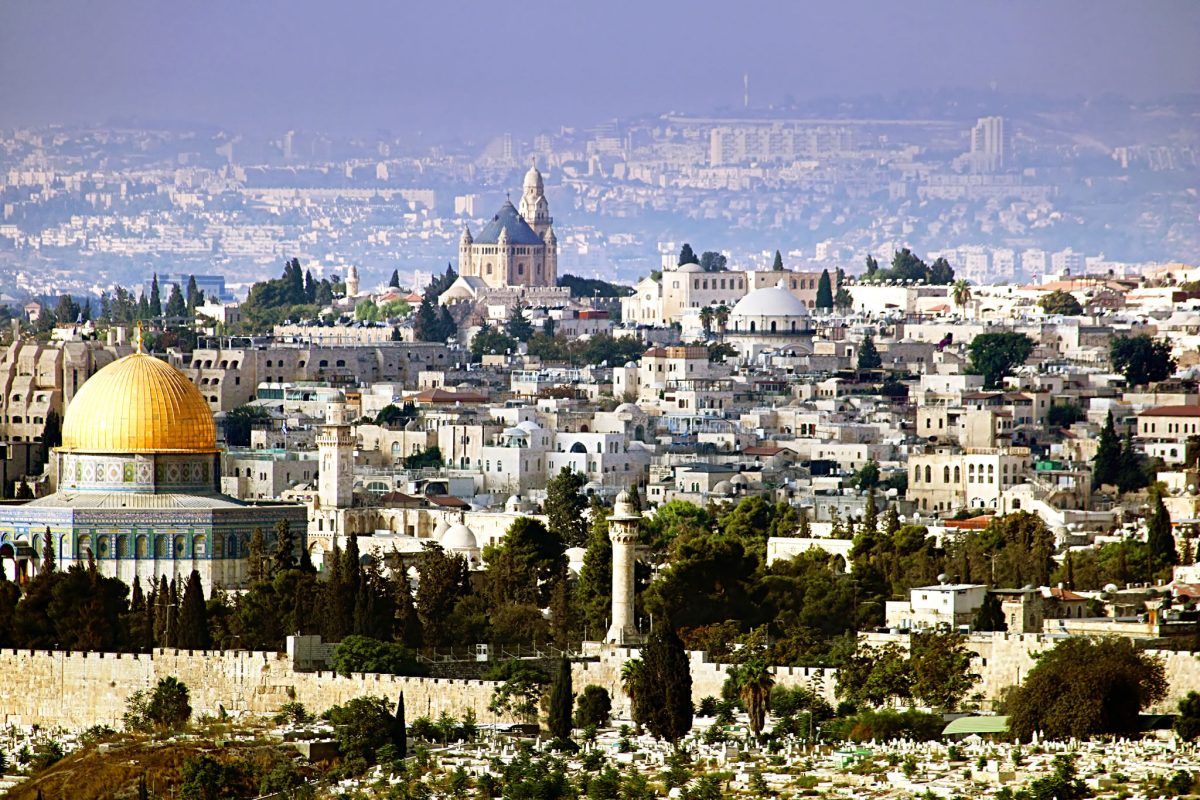
Jerusalem, Israel old city. Skyline of the Old City at the Western Wall and Temple Mount in Jerusalem, Israel.

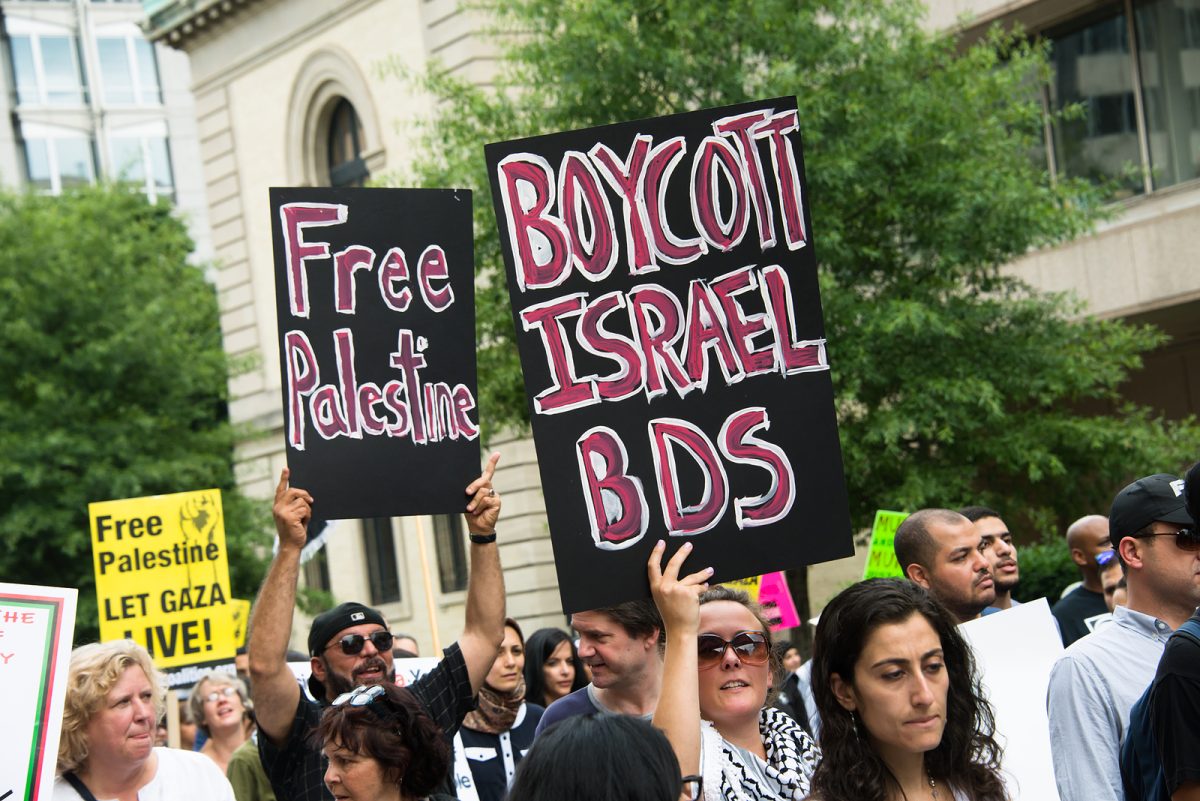
To say the BDS movement is anti-Semitic is a like saying Italian food is Italian. The whole point of the BDS movement is anti-Antisemitism.

BDS stands for Boycott, Divestment, and Sanctions. It is a Palestinian led movement intent on bringing international pressure against Israel by boycotts of all things Israeli – cultural, academic, and financial.

By Divestment – urging banks, pension funds, universities, and all financial institutions to withdraw investments from the State of Israel.

By sanctions – campaigns to pressure governments to sanction Israel by banning all forms of business with Israel, ending military trade and free trade agreements, and suspending Israel’s membership in international forums such as the UN and FIFA.

The BDS movement clearly stands in solidarity with the Palestinians. In an interview, Omar Barghouti, a leading BDS spokesman, was asked if their intent means that Jews cannot have their own state, he said, “Not in Palestine.” The word Palestine refers to the entire area of Israel and the Palestinian territories.

While leaders of the BDS movement insist it is not anti-Semitic, many Israelis and international Jews say it is, using the “three-D test” to differentiate reasonable criticism of Israel from anti-Antisemitism.

The three-D test: does the criticism de-legitimize Israel, does it apply a double standard, does the criticism demonize Israel?

The BDS movement does all three, its critics say. By questioning Israel’s right to exist, it delegitimizes the State of Israel. A double standard is applied when Israel is singled out for its treatment of its Arab citizens when minorities in many countries, including Arab, and including Palestinian areas, suffer far more. BDS supporters also demonize Israel when they make declarations such as, “Israel is a great danger to humanity.” At the same time, many Palestinian Arabs call for the annihilation of Jews in Palestine.

Is the BDS movement anti-Zionist? Unequivocally yes. BDS leader, Omar Barghouti said, “A Jewish state in Palestine in any shape or form cannot but contravene the basic rights of the indigenous Palestinian population and perpetuate a system of racial discrimination that ought to be opposed categorically.”

The BDS movement rejects Israel’s right to exist, it encourages Palestinians to demand the right of Palestinian refugees to return to their land before the 1948 war of independence, which Israel would never accept. It pressures only one side to make concessions and discourages any bridge building efforts between Palestinians and Israelis so as not to “normalize” Israel. All such positions are counterproductive to resolving the Israeli-Palestinian conflict.

Legislatures in at least 35 states have passed laws and executive orders designed to discourage government agencies from contracting with or investing in companies that support the BDS movement. Many such laws have passed with wide bi-partisan support.

By Pastor Rich Jones

WASHINGTON, DC – AUGUST 2, 2014: Thousands march in Washington D.C. to protest against U.S. support for Israel’s offensive in Gaza.

Conflict and tension in the Middle East has been one of the most difficult issues confronting world leaders since Israel became a nation on May 14, 1948. One of the greatest obstacles to Arab – Israeli peace is the issue of Palestinian refugees who trace their origins to the events before and after that date.

Tensions between the Arabs and the Jews in the area of Palestine increased when Jews began emigrating to the area in the early 1900s, fleeing anti-Semitism in Eastern and Western Europe.

Israel had been a people without a homeland since the Roman Empire defeated and destroyed Israel in the first century. Dispersed among the nations, the Jewish people longed to return to the land given to the descendants of Abraham, Isaac, and Jacob.

The question, “What do we do with these Jews?” was answered by anti-Semitism and persecution throughout Europe, East and West. Jews came in waves of tens of thousands to Palestine, seeking a homeland. When Adolf Hitler proclaimed the “Final Solution” to the question “what do we do with these Jews?”, immigration to Palestine became a matter of life and death.

Tensions flared in Palestine as Arabs grew increasingly concerned with the sheer number of Jews making Aliyah; emigrating to Palestine. Riots and armed skirmishes increased. Efforts to find peaceful coexistence came to naught.

The conflict between the Arabs and Jews fell to the British Empire, who were given authority to govern Palestine by the League of Nations in 1917 when the British defeated the Turks of the Ottoman Empire in WWI.

Under the British Mandate, the conflict between the Arabs and Jews became untenable. Jews fled Nazi Germany only to encounter a British naval blockade. Ships filled with Jewish refugees were turned back or held in camps on Cyprus. The British were trying to appease the Arabs who objected to the sheer number of choose escaping Germany.

The British gave notice to the United Nations that they would terminate their mandate of authority over Palestine, giving a deadline of May 15, 1948. The United Nations responded with a plan of partition, giving Jews and Arabs distinct boundaries and borders for two new states, one Jewish, one Arab.

The Jews accepted the partition plan and declared themselves to be the State of Israel on May 14, 1948. The Arabs rejected the partition plan and immediately declared war on the newly formed State of Israel. The Arabs would not acknowledge Israel’s right to exist and declared the intent of the war to be total annihilation of Jews in Palestine.

War between five Arab nations, the Palestinian militias and Israel resulted in victory for Israel, expansion of its boundaries, and Palestinian refugees. Arabs to this day refer to it as Al Nakba, or, “the disaster.”

How these Palestinians became refugees has been debated by historians since the end of the war. There are in fact several factors that caused those Palestinians to become refugees.

Those Arab nations, who in 1948 were determined to destroy Israel, warned in advance those Arabs living in the war zone to remove themselves so as not to be collateral damage in the war. Arab leaders promised these Palestinian Arabs that they would be removed from their homes only temporarily. After the complete annihilation and defeat of Israel, they could return to their homes. To this day, the “right of return” of these Palestinian Arabs is a point of contention.

Other Palestinian Arabs who had the means, removed themselves voluntarily. They also wanted not to be collateral damage in a war. They also have made claims of the right to return.

As the fighting commenced, Israeli soldiers advanced swiftly. When they came to an Arab village, they would send delegates to the village leaders, asking, “Will you take up arms against us?” If they said they would not take up arms, they would be welcomed into the new state of Israel. If the Arab village leaders were determined to fight, the Israeli Defense Forces (IDF) would expel them to join the other Palestinian refugees. They could not have enemies within their borders.

Other Arab villages and cities would simply flee when defeat became certain. They were convinced that since the Arabs had determined to annihilate the Jews, they themselves would be annihilated if their city was taken by Israel. Reassurances by the IDF were rebuffed. Many Palestinian Arabs fled in the face of certain defeat and joined other Palestinian refugees.

The Arab/Israeli war of 1948 resulted in approximately 750,000 Palestinian refugees. The Six-Day War of 1967 brought further Palestinian Refugees. According to the United Nations Relief and Works Agency for Palestine refugees in the near East, there are today approximately 5 million Palestinian refugees.

By Pastor Rich Jones

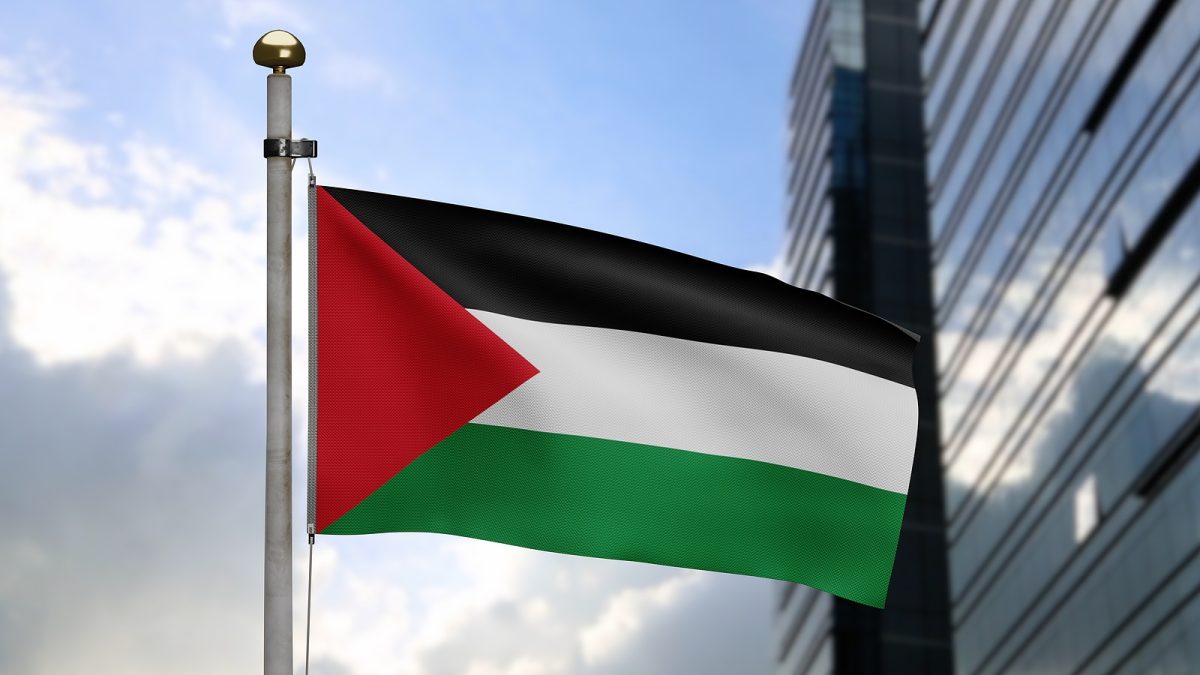
3D, Palestinian flag waving on wind with modern skyscraper city. Palestine banner blowing smooth silk. Cloth fabric texture ensign background. National day and country occasions concept.

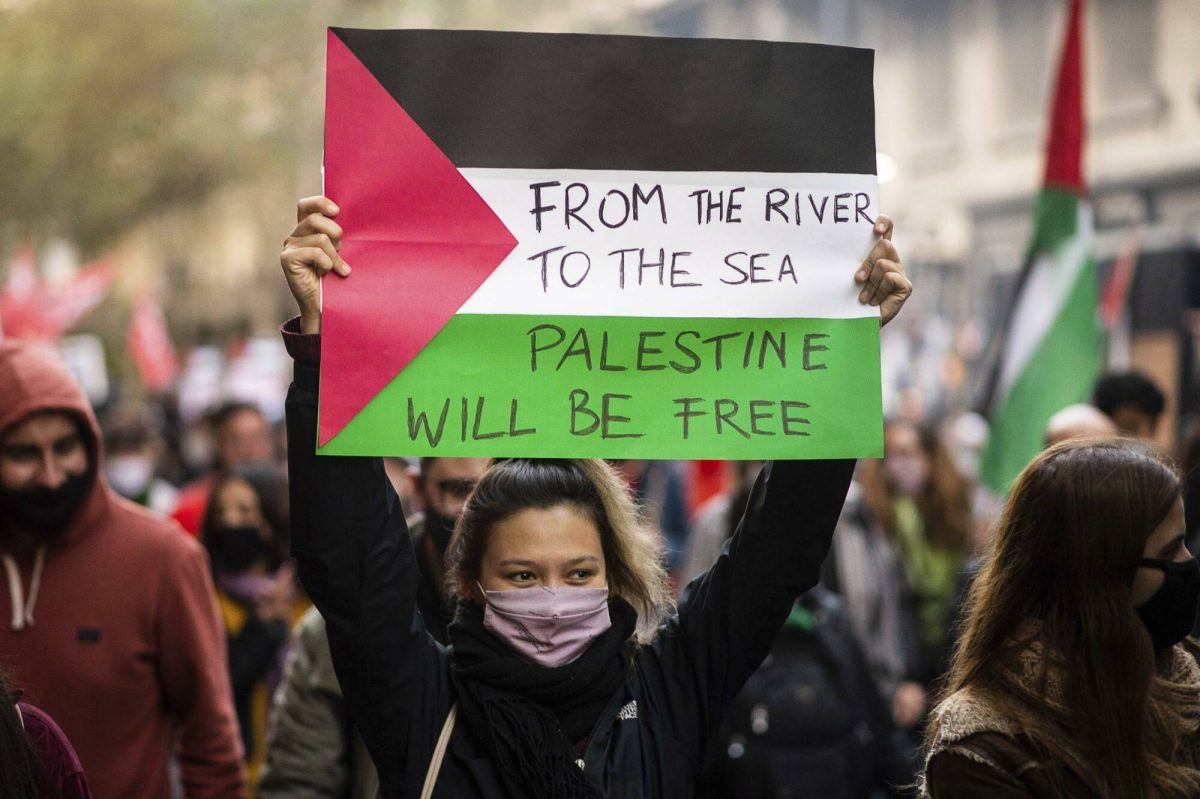
Those who support Palestinian Arabs in the conflict with Israel, often use the saying, “From the River to the Sea, Palestine will be Free.” That slogan has been a rallying cry for political mobilization and military resistance of Israel for more than 40 years. From the river to the sea means the River Jordan to the Mediterranean Sea. The word ‘Palestine’ is often used to describe the whole of the area, Israel and the Palestinian territories.

The slogan has two essential meanings, depending on the audience. The phrase itself was born in a Palestinian uprising in Gaza, along the Mediterranean in South East Israel in 1987. The loudly shouted slogan meant to proclaim that from the Jordan River to the Mediterranean Sea, Palestine will be free from Jews. The meaning was clear, to declare the intent of erasing the State of Israel and its Jewish people.

The meaning of the slogan has evolved. The blatant anti-Semitic, genocidal roots of the saying has brought a certain modern political correctness in its use. On May 19, New Yorker Union tweeted, “Solidarity with Palestinians from the river to the sea who went on a 24 hour strike yesterday for dignity and liberation.” They were immediately called out for implicitly calling not only for the dismantling of the State of Israel, but the cleansing of the entire region of its Jewish population.

Trying to un-moor the saying from its historical roots, modern-day activists suggest that it refers to standing for Palestinian basic rights “throughout their homeland.” These basic rights, they say, are being denied because of Israeli oppression, ignoring that the reason for such Israeli control has everything to do with the intent to destroy the State of Israel “from the river to the sea.”

By Pastor Rich Jones

The historic cooperation agreements between Israel and several of her Arab neighbors, referred to as the Abraham Accords, have deep significance for the Middle East. It’s past is rooted in Abraham himself and its future has implications in the fulfillment of biblical prophecy.

Judaism, Islam, and Christianity all trace their roots to biblical Abraham. Arab nations are descended from Abraham’s son, Ishmael, through Hagar who was a handmaiden to Abraham’s wife, Sarah. The people of Israel are descended from Abraham’s son, Isaac, whom Sarah bore to Abraham as the fulfillment of God’s promise.

Tensions between them was foretold in a prophetic word to Hagar in Genesis 16, “You shall bear a son, and you shall call his name Ishmael… his hand will be against everyone, and everyone’s hand will be against him; and he will live to the east of all his brothers.”

Peace in the Middle East has been one of the greatest challenges facing world leaders in generations. Since the founding of the state of Israel on May 14, 1948, administration after administration has attempted to broker peace. Perhaps the greatest obstacle to peace in the Middle East is the ongoing conflict between Israel and the Palestinian Arabs. Perhaps the greatest aspect of that conflict has been the ongoing declaration by the Palestinian Arabs calling for the complete destruction of Israel.

With the intransigence of the seemingly unsolvable issues between Israel and the Palestinian Arabs, the Trump administration suggested that normalization of relations between Israel and Arab nations should be separated from the status of the Palestinian Arabs.

The Abraham Accords represent a rejection of what has been the central issue, the problem of the Palestinian Arabs. The unprovoked attacks by the Palestinians in Gaza in April and May of this year tested those Accords. The signatories of the Abraham Accords offered only mild criticism, however, and the accords held firm.

Arab ties with Israel, brought about by the Abraham Accords, provide economic opportunities. But perhaps more importantly, Arab relationships to Israel serve as a counterweight to the influence of Iran. Though the nation of Iran is primarily Muslim, it is not Arab. Concern over Iran’s increasingly hostile actions against her Arab neighbors have drawn them closer to Israel, a facilitator of access to US arms and a source of security against hostile Iran.

The Abraham Accords are also perhaps a glimpse into the prophetic future. The biblical perspective, prophetically, is that a respected world leader arises in the latter days will sign a treaty of peace, or a covenant of peace, between Israel and the nations of the world. Could these Abraham Accord be a precursor of such a future covenant of peace?

By Pastor Rich Jones

Has October 7, 2023 Set The Stage for the Fulfillment of Ezekiel 38:8, 11-12?

The recent dustup regarding the US government’s funding of the Iron Dome missile defense system in Israel, revealed growing anti-Semitism in Congress. Progressives within government ranks forced the removal of $1 billion in funding from an emergency spending bill to keep the federal government open. Seizing the opportunity afforded by the emergency spending bill, anti-Israel progressives laid bare their anti-Israel sentiment.

After the Iron Dome funding was removed, Rep. Ilhan Omar (D-Minn) tweeted, “Here’s an idea: don’t sell arms to anyone who violates human rights.” But as members of the House Armed Services Committee pointed out in response, “The Iron Dome is a purely defensive system that protects civilians when hundreds of rockets are shot at population centers.”

When anti-Israel sentiment reaches the point of disregard for the protection of tens of thousands of civilians, there is a problem.

The removal of funding for the Iron Dome defense system from the emergency spending bill, forced House Democratic leaders to immediately introduce a stand-alone bill to provide the funding. The measure passed by 420 to 9.

The removal of the Iron Dome Funding angered centrist Democrats and lead Republicans to label the party as anti-Israel. What it revealed is that rising anti-Semitism will become an increasingly difficult problem, particularly on the left. The $1 billion in Iron Dome funding is intended to replace missile interceptors Israel used to ward off rockets fired from Palestinian controlled Gaza during the most recent conflict.

By Pastor Rich Jones

God has a special place in His heart for Israel. He calls Israel the apple of His eye. If God has a special place in His heart for Israel, then so should we, for those who bless Israel will be blessed. God will see to it.

God gave a promise to Abraham and that promise was passed to his son Isaac, and to Jacob and his 12 sons and to the children of Israel today. That promise is found in Genesis 12:2-3, “I will make you a great nation, and I will bless you, and make your name great, and so you shall be a blessing. And I will bless those who bless you, and the one who curses you I will curse. And in you all the families of the earth will be blessed.”

Those promises given to Abraham and passed down to the inheritance of Israel is still true today. Those who bless Israel will be blessed. That truth should inform our foreign policy as a nation. And it should inform our perspective on Israel today.

This nation is the most prosperous and powerful nation on the earth. It has also been the greatest supporter and ally of Israel since it became a nation on May 14, 1948. One of the greatest influences of that national support for Israel has come from the church.

We are also recipients of God’s blessings that have come to us through Israel. Jesus Himself was a Jew, and through Him, truly all the nations of the earth have been blessed. As Jesus said to the woman at the well in John 4, “Salvation comes from the Jews.”

The disciples were Jews. Much of the New Testament was written by those who were Jews. The patriarchs, the promises, the Old Testament, and the prophets, all came to us through Israel. Indeed, we are indebted to them. Romans 15:27.

Christians should bless Israel by praying for them. Psalm 122:6-7 informs our prayer, “Pray for the peace of Jerusalem; pray, ‘May they prosper who love you. May peace be within your walls, and prosperity within your palaces.'”

Pray for the peace of Jerusalem because God has placed His name there. It is a city of His own possession. The enemies of God seek to destroy the apple of His eye. Israel will be the center of the unfolding events of the latter days and Jerusalem will be the epicenter.

May we stand with Israel as Isaiah the prophet declared, “For Zion’s sake I will not keep silent, and for Jerusalem’s sake I will not keep quiet, until her righteousness goes forth like brightness, and her salvation like a torch that is burning.” Isaiah 62:1.

Blessors of Israel will not keep silent, and for Jerusalem’s sake, we will not keep quiet. Stand with us as we stand with Israel; for those who bless Israel will be blessed.

By Pastor Rich Jones

Dominant lion, great bearing and appearance

The conflict in the Middle East has a long and deep history. Tensions between the Israelis and the Palestinian Arabs can be traced back in history to Abraham, father of both Israel and the Arab nations.

The more recent history of this conflict, however, began in the late 1800s and continues to this day. Facing extreme anti-Semitism in Europe and Eastern Europe, many Jews sought refuge in their ancient homeland, the land of Palestine.

Tensions with the Palestinian Arabs grew exponentially as Jews migrated in waves by the tens of thousands, many of them fleeing Nazi Germany in the 1930s.

The British government controlled the area of Palestine when they defeated the Ottoman Empire in WWI. The Ottoman Turks, who, it’s important to note, are not Arabs, controlled Palestine previously for 400 years.

The conflict between the Jews and the Palestinian Arabs then fell to the British, given the mandate to oversee the area by the League of Nations in 1917. The British believed that the answer to the conflict was to partition Palestine. In other words, to create separate and distinct areas for the Jews and the Palestinian Arabs; a two-state solution.

All such partition plans were rejected by the Palestinian Arabs.

With tensions reaching a fever pitch after WWII, the British declared themselves to be at an impasse and referred the entire conflict to the newly formed United Nations, setting a deadline of May 15, 1948. If no solution was set forth by that date, they would nevertheless terminate the mandate and withdraw.

The United Nations’ Palestine Commission determined that the answer to the conflict between the Jews and the Palestinian Arabs was a two-state solution. A partition plan was submitted to the UN general assembly with distinct borders for a state of Israel and a state of Palestine.

The Ottoman Empire in modern-day Turkey, controlled the area of Palestine for 400 years, from 1516 to 1917. The British Empire defeated the Ottomans in WWI and were given a mandate to oversee Palestine by the League of Nations, precursor to the United Nations.

The UN general assembly approved the partition of Palestine to create a two-state solution with a vote of 33 in favor, 13 against, and 10 abstentions. The Palestinian Arabs and neighboring Arab nations rejected the plan outright.

The Jews accepted UN Resolution 181 and declared the newly formed state of Israel on May 14, 1948, accepting the terms and conditions and boundaries proposed by the Palestine Commission. Had the Palestinian Arabs accepted the UN partition plan and also declared themselves to be the State of Palestine, there would exist today two states, Israel and Palestine and the conflict in the Middle East would not exist as we know it today.

Since Israel announced the newly formed state of Israel on May 14, 1948, many world leaders have made efforts to solve the conflict by again proposing a two-state solution. All such efforts have failed. Terms and conditions for such an agreement have been repeatedly rejected by both the government of Israel and the leadership of the Palestinian Arabs.

Prime Minister of Israel, Naftali Bennett, was recently asked by an international news organization, “When will tensions and in the Middle East?” Bennett responded, “The answer is simple; when they stop trying to kill us.”

By Pastor Rich Jones

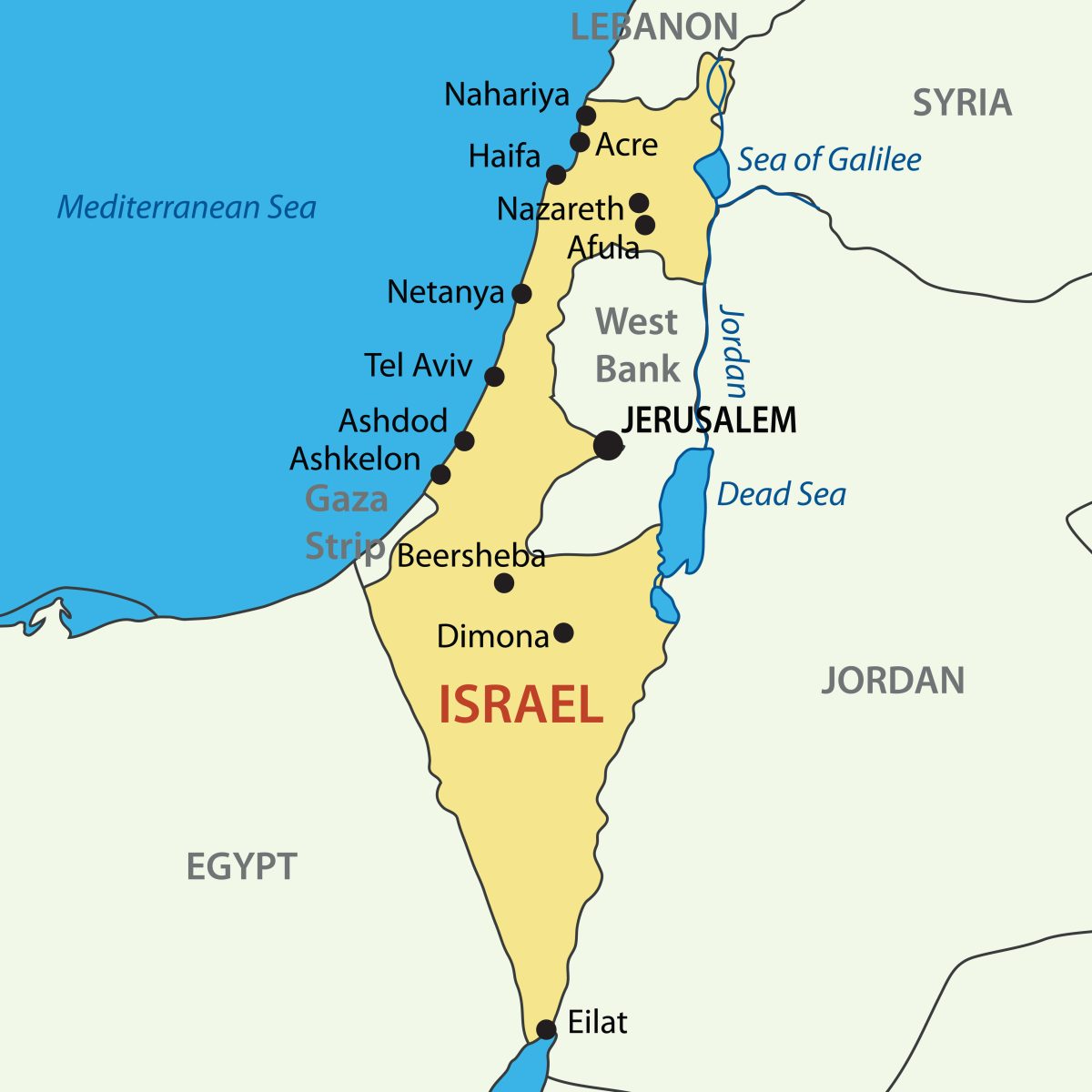
State of Israel