




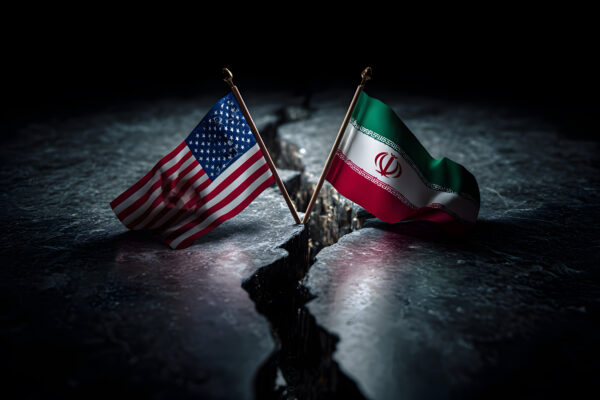
Earlier today it was announced that diplomatic efforts between the United States and Iran may have produced a tentative 60-day Memorandum of Understanding (MoU) aimed at extending a fragile ceasefire and opening talks on Tehran’s nuclear ambitions. Yet, beneath the headlines of potential breakthroughs lies a complex web of skepticism, ongoing military actions, and historical precedents that demand cautious scrutiny.
According to Axios, the key provisions of the MoU include unrestricted shipping through the Strait of Hormuz — with Iran required to clear mines within 30 days — phased lifting of the US naval blockade, temporary sanctions waivers for Iranian oil exports, and an Iranian commitment not to pursue nuclear weapons. Negotiations during the 60 days would prioritize Iran’s highly enriched uranium stockpile and enrichment limits, with the US open to discussing sanctions relief and frozen funds. The deal also envisions a Lebanon ceasefire, though Israel retains operational freedom against immediate threats (The Times of Israel).
However, critical approvals remain outstanding. President Donald Trump has requested additional time to review, while Iranian media, citing sources close to the regime, insists the text “has not yet been finalized or confirmed” and dismisses reports to the contrary as false. Israeli sources go further, stating there is “no indication” that Supreme Leader Mojtaba Khamenei has approved the terms” (The Times of Israel). Trump has nothing to approve at this stage,” they noted, highlighting that negotiators like Iranian Foreign Minister Abbas Araghchi and Parliament Speaker Mohammad Bagher Ghalibaf lack full signing authority (The Times of Israel).
This uncertainty unfolds against the backdrop of persistent regional volatility. The Times of Israel is reporting that Iranian armed forces have carried out a “missile launch operation. . . intended as a warning to ships in the Strait of Hormuz.”
In Israel, Prime Minister Benjamin Netanyahu has directed the IDF to expand control to 70% of the Gaza Strip, which exceeds ceasefire parameters. At a conference held by the Ein Prat Leadership Academy, Netanyahu said, “At this point, we are fully in control of 60% of the territory of the Gaza Strip. . . and my directive is to get to. . . 70%” (The Times of Israel). Reuters reports that Netanyahu justifies the seizing of territories in Gaza, Syria, and Lebanon because Israel needs “buffer zones” to stave off potential militant attacks.
Israel has also conducted a precision strike in Beirut — the first since May 6 (JNS) — while IDF Spokesman Brig. Gen. Effie Defrin announced the IDF has “eliminated nearly a third” of Hezbollah’s forces since October 7, 2023, when Hamas terrorists attacked Israel (The Times of Israel).
Iran’s internal divisions add layers of risk. Hardliners oppose any US engagement, reportedly engaging in sabotage such as mine-laying in Hormuz (Breitbart). Iran’s Supreme Leader Mojtaba Khamenei, whose whereabouts remain unclear following earlier strikes, issued a militant message urging unity against perceived enemy efforts to sow division: “The enemy’s plan, following its failures on the battlefield, has shifted to economic pressure, a propaganda and political siege, and above all, an attempt to create division and social fragmentation in order to subdue the people” (World Israel News). Analysts question his full control, with the IRGC potentially wielding significant influence.
A deeper analysis from the Gatestone Institute warns that any deal with Iran risks repeating past mistakes. Khaled Abu Toameh argues the Iranian regime views diplomacy as “a tactical weapon: a means to buy time. . . and secure economic relief” while advancing strategic goals. “There can be no ‘good’ deal with a jihadist regime,” Toameh asserts, citing Tehran’s history of violating commitments like the 2015 JCPOA (Gatestone Institute).
Recent satellite imagery confirms Iran is rapidly rebuilding its missile and drone arsenal during the ceasefire (Israel Hayom). Israel is concerned about this revelation since Iran’s ballistic program is not mentioned in the MoU though it was a key factor when the US and Israel attacked Iran three months ago.
The coming days — with Trump’s decision pending — will reveal whether the MoU fosters genuine de-escalation or a pause before renewed kinetic engagement. True peace requires more than paper agreements; it demands transformed behavior from those who have long championed “Death to America” and “Death to Israel.”
Blessors of Israel continues to closely monitor this developing story. Please pray for our leadership, troops, Israel and her people, along with the Iranian people.
Dr. Matthew Dodd, Executive Director | May 28, 2026