




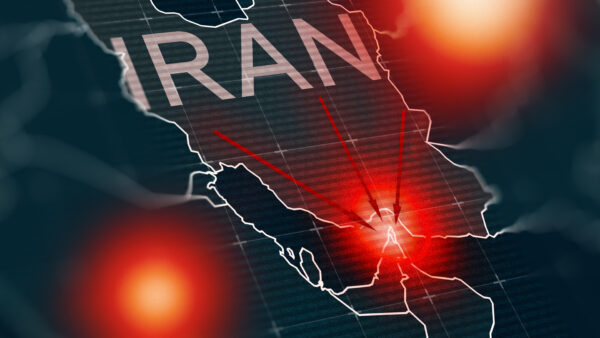
Diplomatic efforts to reopen the Strait of Hormuz and ease the five-month U.S.-Iran conflict appear to have advanced amid conflicting statements from Washington and Tehran, Gulf mediation, and concerns over U.S. munitions stockpiles.
On August 2, President Donald Trump announced he had canceled a planned major U.S. attack—described as potentially the largest since World War II—after requests from Iran and Gulf allies including Saudi Arabia, the United Arab Emirates, and Qatar. Saudi Crown Prince Mohammed bin Salman urged prioritization of dialogue to avoid a wider conflict affecting regional and international stability, according to reports of their phone conversation. Trump stated that the “perimeters of a deal” had been reached involving the immediate full opening of the Strait of Hormuz and an end to Iran’s nuclear threat (Breitbart).
Speaking on August 3, Trump said talks were underway at the request of Iran and regional partners. “This is a last chance for them to sign a good document,” he said in the Oval Office, outlining a two-phase approach: first reopening the strait, potentially “literally by tomorrow,” followed by discussions on Iran’s denuclearization, which “will take a little while.” He added that he wanted to “give them every last chance before decapitation” and noted the U.S. Navy already controlled the waterway through its blockade (Breitbart).
Iranian officials rejected claims of direct U.S. talks. Foreign Ministry spokesman Esmaeil Baghaei stated on August 3 that Tehran was not negotiating with the United States and had no plans for meetings or hosting delegations. “Our negotiations are with Oman to secure passage through the Strait of Hormuz,” he said. Baghaei indicated talks with Oman focused on a mutually acceptable shipping route respecting sovereign rights, not a full return to prewar free navigation, and that the strait situation would remain unchanged while the U.S. naval blockade continued (The Times of Israel; Breitbart). On Truth Social, Trump called Iranian leaders “unbelievably duplicitous,” asserting they had asked for meetings yet publicly denied discussions (The Times of Israel).
Reports described an emerging Iran-Oman framework in which inbound vessels would use a northern route near Iran’s coast under Iranian control, while outbound traffic would follow a southern path nearer Oman. Iranian sources suggested “service fees” shared equally, though U.S. officials disputed any requirement for Iranian approval or tolls. Qatar’s Foreign Ministry spokesman Majed al-Ansari confirmed on August 4 that mediation efforts involving Qatar, Pakistan, and Oman were ongoing and at progressive stages focused on de-escalation and opening the strait, though no direct U.S.-Iran talks were scheduled (The Times of Israel; Breitbart).
U.S. Treasury Secretary Scott Bessent expressed optimism on August 4, telling CNBC there was a chance of a deal “today or tomorrow” to reopen the strait and move toward a more normalized position. He indicated it would involve freedom of movement rather than Iranian tolls and expected energy prices to settle as ships began exiting (The Times of Israel).
Internal Iranian dynamics complicated the picture. President Masoud Pezeshkian released a pre-recorded video on August 4 insisting he would not resign, stating, “I will not resign and I will stand firm. If I resign, I will formally announce that I have resigned.” He claimed full coordination with the military amid reports of repeated resignation threats and tensions with hardliners over war management and negotiations. Pezeshkian also said Iran would defend its borders but did not seek to expand the war. . Senior cleric Mohammad Bagher Kharrazi, linked to the supreme leader’s family, claimed Mojtaba Khamenei had warned that another resignation attempt would be accepted (Breitbart; The Jerusalem Post; i24NEWS).
U.S. Ambassador to NATO Matthew Whitaker noted Iran’s difficulty speaking with one voice between the Islamic Revolutionary Guard Corps and political leadership but said the sides were “closer than we’ve ever been to a deal” (Breitbart).
Alongside diplomatic efforts, defense analysts and news outlets have published assessments regarding the operational strain imposed by prolonged U.S. military engagements. Reports suggest that five months of continuous operations have resulted in a significant drawdown of specific long-range precision weapons, including Army Tactical Missile Systems (ATACMS) and Precision Strike Missiles (PrSM), as well as defensive interceptors such as Patriot and THAAD systems (Fox News). Sources familiar with internal data reported the Army had used “virtually all” of its ATACMS and PrSM stocks, nearly half its global Tomahawk inventory, about 65 percent of Patriot interceptors, and at least 38 percent of THAAD interceptors between February and July. Officials are worried that this could affect readiness for other contingencies like China or North Korea. Trump rejected shortage claims, stating the U.S. has “far more munitions than anyone in the world, and far more than we need,” with defense firms producing at record levels and expanding capacity. Pentagon spokesman Sean Parnell affirmed the military retained deep capabilities (Fox News; World Israel News; Israel Hayom).
Blessors of Israel continues to closely monitor this developing story. Please pray for our leaders, troops, Israel and her people, along with the Iranian people.
Dr. Matthew Dodd, Executive Director | August 4, 2026