




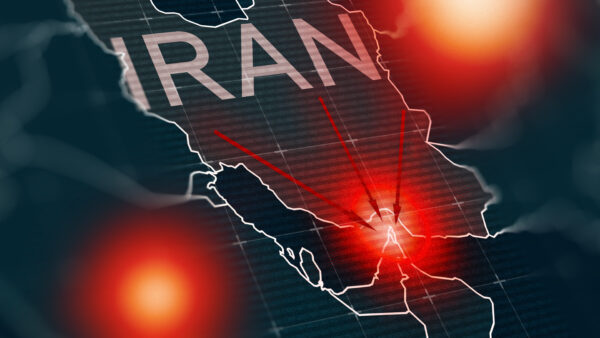
In the shadow of a war that began with surgical precision on February 28, 2026, the Middle East stands at a hazardous intersection. Operation Epic Fury—launched after Prime Minister Benjamin Netanyahu reportedly convinced President Donald Trump to strike Tehran’s leadership compound—has already delivered a historic blow: the elimination of Supreme Leader Ayatollah Ali Khamenei by evening of day one. Over three weeks later, the conflict rages on, with Israel racing against the clock while Washington dangles the possibility of a ceasefire (The Times of Israel; World Israel News).
Netanyahu’s latest directive, issued Tuesday after reviewing the U.S. 15-point proposal, is crystal clear: the IDF must “inflict maximum damage” on Iran’s arms industry within 48 hours. Israeli officials, citing concerns first reported by The New York Times, fear Trump could announce a unilateral month-long pause as early as Saturday. They doubt the plan sufficiently dismantles Iran’s nuclear sites, enriched uranium stocks, or missile programs. Netanyahu himself addressed the nation Monday, revealing he had spoken directly with Trump: “He believes there is an opportunity to leverage the tremendous achievements of the IDF and the US military in order to achieve the objectives of the war through an agreement that will preserve our vital interests” (World Israel News; Israel National News).
The U.S. proposal, relayed through Pakistan and other mediators, demands complete nuclear dismantlement, an end to nuclear enrichment, curbs on ballistic missiles and drones, and severed funding for its proxies. White House Press Secretary Karoline Leavitt struck a firm tone, stating, “But if Iran fails to accept the reality of the current moment, if they fail to understand that they have been defeated militarily and will continue to be, President Trump will ensure they are hit harder than they have ever been hit before. . . Talks continue. They are productive.” She confirmed the U.S. remains ahead of its original four-to-six-week timeline (Reuters).
Tehran’s reply has been defiant. Iranian Foreign Minister Abbas Araghchi told state television, “At present, our policy is the continuation of resistance. . . We do not intend to negotiate — so far, no negotiations have taken place, and I believe our position is completely principled. . . Speaking of negotiations now is an admission of defeat” (The Times of Israel).
A senior political-security official, cited by PressTV, laid out Tehran’s conditions: recognition of its “natural, legal right” over the Strait of Hormuz, guaranteed reparations, an end to all aggression including against proxies like Hezbollah, and guarantees against renewed hostilities. Iran insists it will end the war only “on Tehran’s own terms and timeline” and has threatened to open a Bab el-Mandab front or strike neighboring states if provoked (i24NEWS; The Times of Israel; The Times of Israel).
Yet cracks are visible. A Western diplomatic source told Israel Hayom that immunity was deliberately granted from day one to Iranian President Masoud Pezeshkian and Foreign Minister Abbas Araghchi to keep a negotiation door open. Desertions are rising, salaries unpaid except for a recent holiday bonus, and internal regime disputes are widening. Gulf leaders—including Saudi Crown Prince Mohammed bin Salman, Qatar’s Prime Minister Mohammed al-Thani, and the United Arab Emirates ambassador to the United States, Yousef al-Otaiba—have urged Trump in recent days for a “conclusive outcome,” rejecting Iran’s Hormuz sovereignty claim as a violation of international law and centuries of regional norms (Israel Hayom; The Times of Israel).
Vice President JD Vance is now preparing direct talks in Pakistan, a channel Iran reportedly prefers over Steve Witkoff and Jared Kushner “Iranian officials do not view him as a hard-liner on national security issues” (Ynet News; i24NEWS). Pentagon reinforcements—additional Marines and 82nd Airborne elements—signal that military pressure will not ease (Fox News).
This situation underscores a critical alignment of interests among key players. Reports indicate regime vulnerabilities within Iran, including rising desertions and internal fractures, coinciding with coordinated positions from Israel, the United States, and Gulf Arab states demanding not just a temporary halt but the complete neutralization of Iran’s long-standing threats to regional stability. Prime Minister Netanyahu’s focus on safeguarding Israel’s vital interests, alongside the Trump administration’s approach of sustaining military operations while pursuing diplomacy, points to the potential for the operation’s initial achievements—such as the removal of top leadership, disruption of weapons infrastructure, and weakening of proxy forces—to contribute to greater long-term security in the Middle East (Israel Hayom).
However, significant risks persist. An abrupt ceasefire could enable Iran to rebuild its military capabilities. Iran’s historical skepticism toward diplomatic agreements, often followed by renewed hostilities, may lead to an extended conflict. Still, specific developments offer some indication of possible progress: the strategic decision to grant immunity to President Masoud Pezeshkian and Foreign Minister Abbas Araghchi from the outset, the allowance of limited fuel tanker passages through the Strait of Hormuz that President Trump referred to as a valuable “gift,” and the strong calls from Gulf leaders for full threat elimination all suggest avenues for negotiation remain active. Strikes on Iran’s underground missile production sites are ongoing even as diplomatic channels stay open (Israel Hayom).
Looking ahead to the next few days, potentially including announcements by this weekend, the resolution will hinge on whether Iran’s current stance shifts under sustained pressure or if battlefield developments dictate the terms of any agreement.
Blessors of Israel continues to closely monitor this developing story. Please pray for our leadership, troops, Israel and her people, along with the Iranian people.
Dr. Matthew Dodd, Executive Director | March 25, 2026