




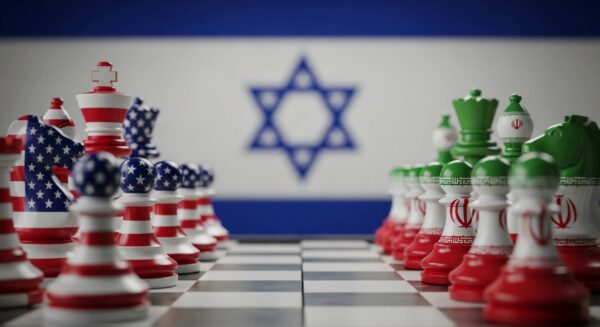
On July 28, 2026, U.S. President Donald Trump and Israeli Prime Minister Benjamin Netanyahu held a closed-door meeting in the Oval Office lasting about 80 to 90 minutes. The session, their first in-person talks since the Iran war began on February 28, 2026, focused primarily on preventing Tehran from obtaining a nuclear weapon. Officials on both sides described the discussions as positive and productive, emphasizing shared goals amid ongoing diplomatic efforts and a recent pause in U.S. military strikes (The Times of Israel).
Netanyahu characterized the meeting as excellent. “It was a meeting with full cooperation, with mutual support, with understanding on the joint goal that Iran won’t have nuclear weapons, and also other goals,” he said afterward. “It was one of the best conversations I’ve had with our friend, US President Trump,” and “an opportunity to exchange ideas, and also to coordinate on things that are important for the security and for the future of Israel.” White House Press Secretary Karoline Leavitt confirmed both this meeting and Trump’s earlier session that day with Ukrainian President Volodymyr Zelensky as “positive and productive” (The Times of Israel).
Israeli officials reported that Iran dominated the agenda. Tzipi Hotovely, head of Israel’s National Public Diplomacy Directorate, stated that the leaders shared a complete understanding that Iran must not acquire a nuclear weapon. She noted that the so-called Pickaxe Mountain nuclear site was not discussed, contrary to some pre-meeting speculation. There was also no U.S. pressure on Israel regarding reconstruction in Gaza, withdrawals from Lebanon or Syria, or other regional military postures. Discussions touched on expanding the Abraham Accords, including potential Saudi involvement, at the margins. The U.S. sale of F-35 jets to Turkey was not raised (Ynet News).
A senior Israeli official described the moment as critical: “We are at a critical juncture. President Trump will make a decision soon about the path forward. We are not pressuring him, but neither are we burying our heads in the sand. Netanyahu presented him with Israel’s perspective.” U.S. officials present included Vice President JD Vance, Secretary of State Marco Rubio, Secretary of War Pete Hegseth, and Middle East envoy Steve Witkoff (World Israel News).
The meeting occurred against the backdrop of a pause in U.S. strikes on Iran. On July 27, Trump stated that the United States was engaged in “very deep talks” with Iran. “If they don’t work out, we will go back to very strong military action,” he said. He indicated limited patience: “Not much time. Either it goes fast or not at all.” Trump noted that mediators had urged restraint and that Iran had requested talks through surrogates, adding that military pressure had brought Tehran to the table. “Without what we did, they wouldn’t even be talking to us.” He also highlighted economic measures, including sanctions and a naval blockade, as tools that officials believe are causing significant strain (Breitbart).
Iran has acknowledged substantial infrastructure damage from the recent U.S. campaign. Iranian President Masoud Pezeshkian toured damaged transportation and logistics sites. State media detailed impacts on ports, border terminals, bridges, roads, railways, and other strategic facilities. Pezeshkian ordered faster reconstruction while praising the military for maintaining services. Iranian officials, including Foreign Ministry spokesman Esmaeil Baqaei, continued to blame the United States for violating a June memorandum of understanding that had established a ceasefire, while denying or downplaying Iranian attacks on commercial shipping in the Strait of Hormuz that prompted the U.S. response (Breitbart).
Ukraine’s recent strike on an Iranian vessel alleged to be supplying Russia drew sharp Iranian criticism, with Foreign Minister Abbas Araghchi calling Zelensky a “freeloader” and vowing that the action would not go unanswered. Separately, an Iranian AI-generated video threatened First Lady Melania Trump and their son Barron. Reports also indicated Iranian efforts to leverage U.S. midterm elections for concessions and to influence Israel’s upcoming elections through disinformation and social media operations (Breitbart).
Netanyahu and Zelensky spoke briefly in person at the funeral of late Sen. Lindsey Graham (R-SC), their first such meeting in three years, after both had met separately with Trump. The leaders and their teams attended the memorial service later that day. Graham had been a strong supporter of both Israel and Ukraine (The Times of Israel).
The July 28 White House sessions projected coordination between Washington and Jerusalem on the core objective of blocking an Iranian nuclear capability, whether through diplomacy or other means. Officials stressed that Israel was not directing U.S. decisions, while Trump retained the option of resumed military action if talks falter. Economic pressure via sanctions and the blockade continues alongside mediation efforts involving Oman, Qatar, and Pakistan. Regional dynamics, including potential Saudi nuclear cooperation and Turkey defense issues, remain factors but did not dominate the reported discussions (i24News).
Blessors of Israel continues to closely monitor this developing story. Please pray for our leaders, troops, Israel and her people, along with the Iranian people.
Dr. Matthew Dodd, Executive Director | July 28, 2026