




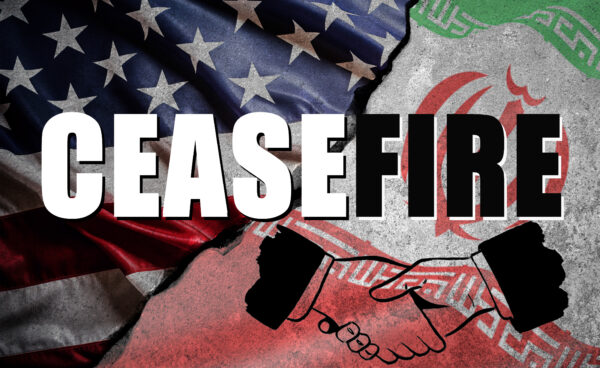
Two weeks. That is the length of the ceasefire Iran and the United States agreed to on Tuesday night, April 7, 2026, after 39 days of devastating conflict that began February 28 with the killing of Supreme Leader Ayatollah Ali Khamenei. As Saturday’s talks in Islamabad loom, the central question is whether this pause can survive its own terms—or whether it is already unraveling under the weight of unmet conditions, proxy wars, and clashing victory narratives.
The truce’s headline achievement was supposed to be the reopening of the Strait of Hormuz. Yet on April 9, the waterway remains “effectively closed,” according to shipping and energy executives. Sultan Al Jaber, head of Abu Dhabi National Oil Company, stated bluntly: “The Strait of Hormuz is not open. Access is being restricted, conditioned and controlled” (Axios). Hundreds of tankers sit idle; nearly 20,000 mariners are stranded. Iran, meanwhile, is floating demands for a $1-per-barrel toll paid in cryptocurrency (Axios)—hardly the “COMPLETE, IMMEDIATE, and SAFE OPENING” that President Trump described in his Truth Social post (Truth Social). New Supreme Leader Mojtaba Khamenei, in a new statement purportedly written by him, declared Iran would bring the strait’s “management of the Strait of Hormuz into a new stage” during negotiations while insisting Tehran is the “definite victor” of the war (Axios).
President Masoud Pezeshkian framed the ceasefire as strength, not surrender: it is “not a sign of weakness but a way to solidify Iran’s proud victories” and was “approved by the supreme leader” (The Times of Israel). Yet inside Iran, diaspora voices express deep anxiety. Kurdish opposition figure Kako Aliyar warned that a regime that “withstood pressure from the United States and Israel” may “become even more confident and intensify its domestic repression” (The Jerusalem Post). Journalist Truska Sadeghi added that the truce “has not really produced results for either side,” leaving “everything in a suspended situation” and risking harsher crackdowns (The Jerusalem Post).
The leadership losses Iran suffered are staggering. A detailed accounting lists 52 senior officials and commanders killed, from the Supreme Leader Ali Khamenei himself to chiefs of staff, defense council secretaries, and intelligence deputies—many struck in the opening minutes or days (Iranian International). The command structure of the Revolutionary Guard has been hollowed out. Yet Mojtaba Khamenei’s statement still demands “compensation for all damages and the price for the blood of martyrs,” while treating “all resistance fronts as a unified entity.” That language keeps Hezbollah, Hamas, and other proxies in play (The Times of Israel).
Nowhere is this tension sharper than Lebanon. Israeli Prime Minister Benjamin Netanyahu stated flatly on April 9: “There is no ceasefire in Lebanon. We continue to strike Hezbollah with great force, and we will not stop until we restore your security.” The goal, he said, is a “historic and sustainable peace agreement between Israel and Lebanon” that disarms the group (The Times of Israel). President Donald Trump confirmed he had urged Netanyahu to keep the campaign “low-key” to protect the Iran truce, telling reporters: “If they don’t make a deal, it’s going to be very painful. . . Remember, they’ve been conquered. They have no military” (The Times of Israel). Iran has signaled it may walk away from Islamabad if Lebanese strikes continue.
Regional actors are hedging. Saudi Arabia and Iran held their first direct foreign-minister conversation since the war—Prince Faisal bin Farhan al-Saud and Abbas Araghchi—yet Saudi energy facilities only recently halted operations after Iranian attacks that killed a security guard (Breitbart). Turkish President Recep Tayyip Erdogan told Iran’s president the Islamabad talks “should be utilized to the fullest extent for lasting peace” (The Times of Israel). Meanwhile, Hamas military spokesman Abu Obaida declared on April 5 that any push for disarmament is “an overt attempt to continue the genocide” the group “will not accept” (Gatestone Institute).
Economically, the war’s scars will outlast any 14-day clock. Shipping giant Maersk warned the ceasefire “does not yet provide full maritime certainty” (Axios). DeVere Group CEO Nigel Green said, “This is a 14-day window, not a permanent policy shift. You have a fifth of the world’s oil supply moving through a corridor that is still effectively under the influence of one of the parties to the conflict. That’s not stability” (Axios). Oil remains near $100 a barrel; fertilizer and helium shortages persist. Inside Israel, the Tax Authority reports nearly 30,000 property-damage claims (The Jerusalem Post). Civilian casualties in Iran from strikes are estimated between 1,701 and 1,900 (The Jerusalem Post). The ceasefire is holding—barely—because both sides need breathing room. But Iran’s victory rhetoric, Hormuz power play, proxy entanglements, and domestic hardline instincts suggest the window is closing faster than diplomats can open it. Without verifiable strait access, verifiable proxy restraint, and verifiable concessions on Iran’s nuclear and missile programs, the most likely outcome is not peace but a return to conflict on even more dangerous terms. Saturday in Islamabad will not decide whether the ceasefire holds; it will decide whether anyone still believes it can.
Blessors of Israel continues to closely monitor this developing story. Please pray for our leadership, troops, Israel and her people, along with the Iranian people.
Dr. Matthew Dodd, Executive Director | April 9, 2026