




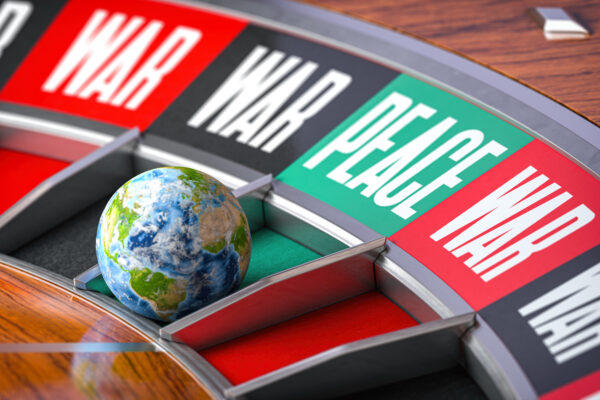
As the U.S.-Israel campaign against Iran enters its fifth week, President Donald Trump is signaling a potential off-ramp that challenges conventional expectations of total victory. With Iran’s military backbone fractured after a month of strikes, Trump appears ready to declare core objectives met—without forcing the reopening of the Strait of Hormuz, the chokepoint Tehran has blocked since late February, throttling 20 percent of global oil flows (Israel Hayom).
Trump’s own words leave little ambiguity, stating, U.S. forces are “significantly degrading Iran’s offensive capacity” and “We’re not going to be there too much longer.” On the Strait, he added, “I think it’ll automatically open. Let the countries that are using the strait go and open it” (Ynet News). A Wall Street Journal report cited across outlets confirms Trump told aides he may scale back fighting after the four-to-six-week window, shifting the burden to Europe and Gulf states via diplomacy or direct action. In Truth Social posts and CBS remarks, Trump vented at allies who refused support: “You’ll have to start learning how to fight for yourself, the U.S.A. won’t be there to help you anymore, just like you weren’t there for us. Iran has been, essentially, decimated. The hard part is done. Go get your own oil!” He singled out France for blocking overflights and the UK for staying out of Iran’s “decapitation” (The Gateway Pundit).
This approach reflects Trump’s frustration with NATO and Gulf partners. France, Italy, Spain, and the UK have restricted U.S. military access for Iran-related operations, prompting Secretary of War Pete Hegseth to urge the Royal Navy to secure the waterway itself (Fox News). Meanwhile, Gulf allies like Saudi Arabia and the UAE are privately pressing Trump to escalate—favoring even a ground invasion—while Oman and Qatar advocate diplomacy (JNS)..
Israel’s leadership views the campaign as transformative. Prime Minister Benjamin Netanyahu declared that Iran’s “trillion-dollar” investment in missiles, nuclear enrichment, and proxies “has gone down the drain” (World Israel News). He framed operations as “ten plagues” against the axis: Hamas, Hezbollah, Houthis, West Bank terrorists, ousted Syrian leader Bashar Assad, and five direct blows to Iran itself—nuclear program, ballistic missiles, regime infrastructure, internal security forces, and senior leaders (The Times of Israel). Netanyahu announced a “strategic turnaround,” stating Iran “no longer poses an existential threat to Israel” and the regime is “weaker than ever,” with new regional alliances forming (Ynet News). IDF Chief of Staff Lt. Gen. Eyal Zamir, coordinating with CENTCOM’s Adm. Brad Cooper, affirmed the “Iranian regime’s axis of terror is beginning to collapse” through “unprecedented” partnership (Israel National News).
Diplomatic threads are tightening. Trump disclosed the U.S. contact is Iranian Parliamentary Speaker Mohammad Bagher Ghalibaf, calling talks “VERY GOOD AND PRODUCTIVE CONVERSATIONS” (World Israel News). Ghalibaf immediately rejected Trump’s claim, writing on X, “Iranian people demand complete and remorseful punishment of the aggressors. All Iranian officials stand firmly behind their supreme leader and people until this goal is achieved. No negotiations have been held with the U.S., and fake news is used to manipulate the financial and oil markets and escape the quagmire in which the U.S. and Israel are trapped” (World Israel News). Iranian Foreign Minister Abbas Araghchi admitted receiving direct messages from U.S. special envoy Steve Witkoff, adding that the messages do not constitute “negotiations” (The Times of Israel). Trump has warned of obliterating energy infrastructure if no deal emerges (Reuters), while China and Pakistan unveiled a ceasefire plan the White House does not oppose (Axios).
If Trump holds firm, the war could conclude without full Hormuz reopening, forcing a new era of allied responsibility. The coming days, as Hegseth noted, “will be decisive” (Reuters).
Blessors of Israel continues to closely monitor this developing story. Please pray for our leadership, troops, Israel and her people, along with the Iranian people.
Dr. Matthew Dodd, Executive Director | March 31, 2026