




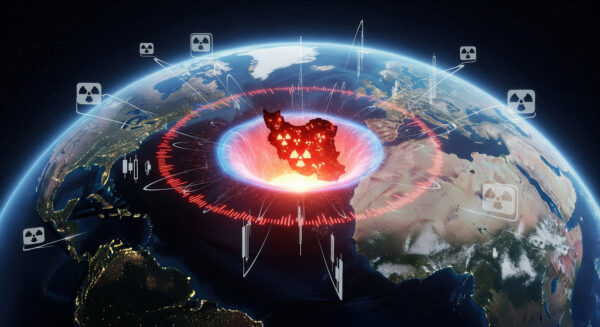
In the volatile waters of the Strait of Hormuz, a single downed helicopter has reignited direct confrontation between the United States and Iran, testing the limits of a fragile ceasefire and the prospects for a lasting peace deal. Taking advantage of the diplomatic window, the regime dragged its feet, hoping that regional chaos would deliver them a stronger hand at the negotiating table. That miscalculation has now triggered a spiral of kinetic force, leaving the Iranian regime backed into a corner of its own making.
The spark came on Monday when an American AH-64 Apache helicopter was shot down near the strategic waterway. Both pilots were safely rescued in a pioneering operation involving a US Navy unmanned surface vessel. President Trump swiftly blamed Iran and ordered retaliatory action. US Central Command (CENTCOM) executed precision strikes on Iranian air defense, radar, and command sites around the Strait, describing them as a “proportional response to unjustified Iranian aggression.” No US or initial Iranian casualties were reported from the US side, though Iran claimed limited damage (Breitbart).
Blindsided by the speed and severity of the American kinetic response, Iran’s remaining leadership lashed out with their typical rhetoric and desperate counter-attacks. Iranian Foreign Minister and principal nuclear negotiator Abbas Araghchi issued an ultimatum on social media, writing: “Our Powerful Armed Forces will leave no attack or threat unanswered. Leave our region if you want to be safe” (Breitbart). Hours later, the Islamic Revolutionary Guard Corps (IRGC) fired a barrage of missiles targeting 21 separate US military facilities across Jordan, Kuwait, and Bahrain. However, illustrating just how severely degraded Iran’s military hardware has become since the onset of Operation Epic Fury on February 28, 2026, coalition air defenses intercepted every single missile. Not a single American life was lost; not a single base suffered damage (Breitbart). Iranian Foreign Ministry spokesman Esmail Baqaei indicated Tehran would reassess ongoing talks.
President Trump has grown visibly frustrated with the pace of diplomacy. In statements to media and on Truth Social, he declared: “Iran is all talk and no action. . . They’ve taken too long to negotiate a deal that would have been great for them, now they will have to pay the price!!!” He hinted at further strikes, potentially targeting power plants or bridges, while noting Iran’s military is “a complete and total mess” after sustained degradation. Yet Trump has also signaled openness to a swift agreement, claiming at points it could come in “two or three days” (Breitbart).
To compound Tehran’s isolation, the International Atomic Energy Agency (IAEA) Board of Governors in Vienna voted on June 10 to pass a sweeping censure resolution, demanding that the cornered regime immediately disclose its hidden uranium stocks and grant international inspectors unfettered access to its nuclear facilities (Associated Press).
Regional ripples abound. Israeli operations against Hezbollah continue, with IDF Chief of Staff Lt. Gen. Eyal Zamir noting preparedness for stronger action against Iran if needed (The Times of Israel). Turkish President Recep Tayyip Erdogan criticized Israeli moves in Syria and Lebanon as threats to Turkey and the Mediterranean (Israel Hayom). Broader condemnations target Iranian-backed terror plotting worldwide.
As President Donald Trump warns Tehran that the time for delays is over, the world questions whether military pressure will finally force concessions on Iran’s nuclear program or spiral into broader conflict. Negotiations hang in the balance, with mediators from Qatar and Pakistan involved, the coming days will reveal if Iran chooses survival through compromise or continued defiance and isolation. The stakes extend far beyond the Hormuz: they touch global security, the future of non-proliferation, and the hope for a more stable Middle East.
Blessors of Israel continues to closely monitor this developing story. Please pray for our leadership, troops, Israel and her people, along with the Iranian people.
Dr. Matthew Dodd, Executive Director | June 10, 2026